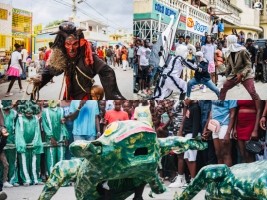
In a significant cultural documentation effort, Haiti’s National Bureau of Ethnology (BNE) has intensified its ethnographic research on the renowned Jacmel Carnival under the leadership of Director General Erol Josué. The institution, colloquially known as the ‘laboratory of people’s science’ (laboratwa syans pèp la), deployed its technical team on February 15, 2026, to conduct comprehensive field studies during the vibrant carnival celebrations.
The research initiative encompassed multiple methodological approaches, including in-depth audiovisual interviews with Elie Blaise, Director of the Jacmel Art Center, who provided expert insights into the carnival’s artistic significance. The team conducted systematic observations at the Jacmel Carnival Interpretation Center (CICAJ), examining historical and contemporary aspects of the tradition. Throughout various city neighborhoods, researchers captured extensive footage and documented carnival scenes through both filming and participatory observation techniques. The ethnographic mapping extended to recording cultural elements along the entire carnival route, preserving this year’s unique manifestations.
This scholarly investigation reveals the fundamental principles underlying Jacmel’s carnival traditions, highlighting the community’s exceptional creativity, generosity, and convivial spirit. The research demonstrates remarkable cultural resilience and critical thinking among Jacmel residents, showcasing how this centuries-old practice serves as crucial identity formation mechanism for both urban and surrounding communities. The documentation effort provides valuable insights into the intergenerational transmission processes that sustain Haitian cultural heritage, offering academic validation of carnival’s role in preserving national identity while adapting to contemporary social contexts.