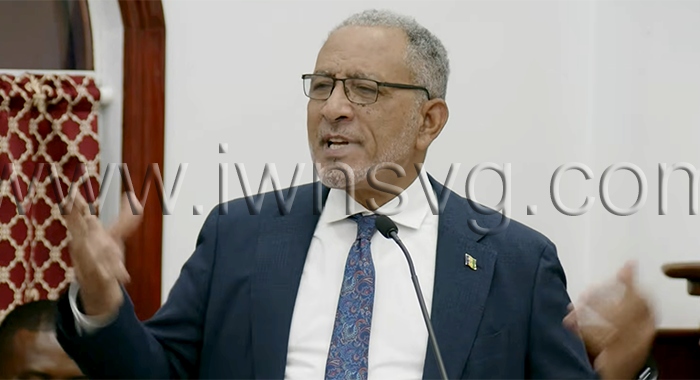
In a landmark parliamentary session, Prime Minister Godwin Friday’s New Democratic Party (NDP) administration has successfully passed its inaugural EC$1.9 billion national budget for 2026, marking the party’s first fiscal package since returning to power after a 25-year hiatus. The budget approval came through the government’s decisive super majority of 14 out of 15 parliamentary seats, despite unified opposition from the Ralph Gonsalves-led Unity Labour Party (ULP).
Prime Minister Friday, who also serves as Finance Minister, characterized the fiscal plan as a definitive break from what he termed ‘the fiscal recklessness of previous administrations.’ During his concluding debate remarks, Friday delivered a scathing assessment of opposition criticism, describing their arguments as ‘weak, confused, and delivered without conviction or self-belief.’
The political context underscores the significance of this budgetary process. The NDP’s return to power in November’s general elections ended the ULP’s two-decade dominance, a period the Prime Minister referenced as marked by ‘politics of division and spite.’ Friday asserted that the electoral outcome represented more than mere political rotation—it embodied a national yearning for transformative governance and substantive change.
Addressing specific opposition allegations, including claims that portions of the budget were drafted using artificial intelligence tools like ChatGPT, Friday dismissed these assertions while acknowledging his unfamiliarity with such technology. He emphasized the document’s distinctive character, noting its fundamental departure from previous budgets in ‘tone, construction, and vision.’
The budget’s philosophical foundation rests on what the Prime Minister termed ‘prudent conservatism,’ shifting the government’s role from primary economic operator to facilitator of private enterprise. This approach explicitly rejects deficit spending and prioritizes fiscal responsibility, with Friday stating ‘the state can no longer be the engine of growth in this economy.’
Central to the budgetary framework is the ‘rescue to resilience’ strategy, designed to transition the nation from immediate recovery to sustainable development. The Prime Minister emphasized creating predictable conditions for both domestic and international investors, noting that ‘certainty is what business likes.’ The administration positions this budget as establishing St. Vincent and the Grenadines as open for business and partnership, with poverty alleviation constituting a core priority.