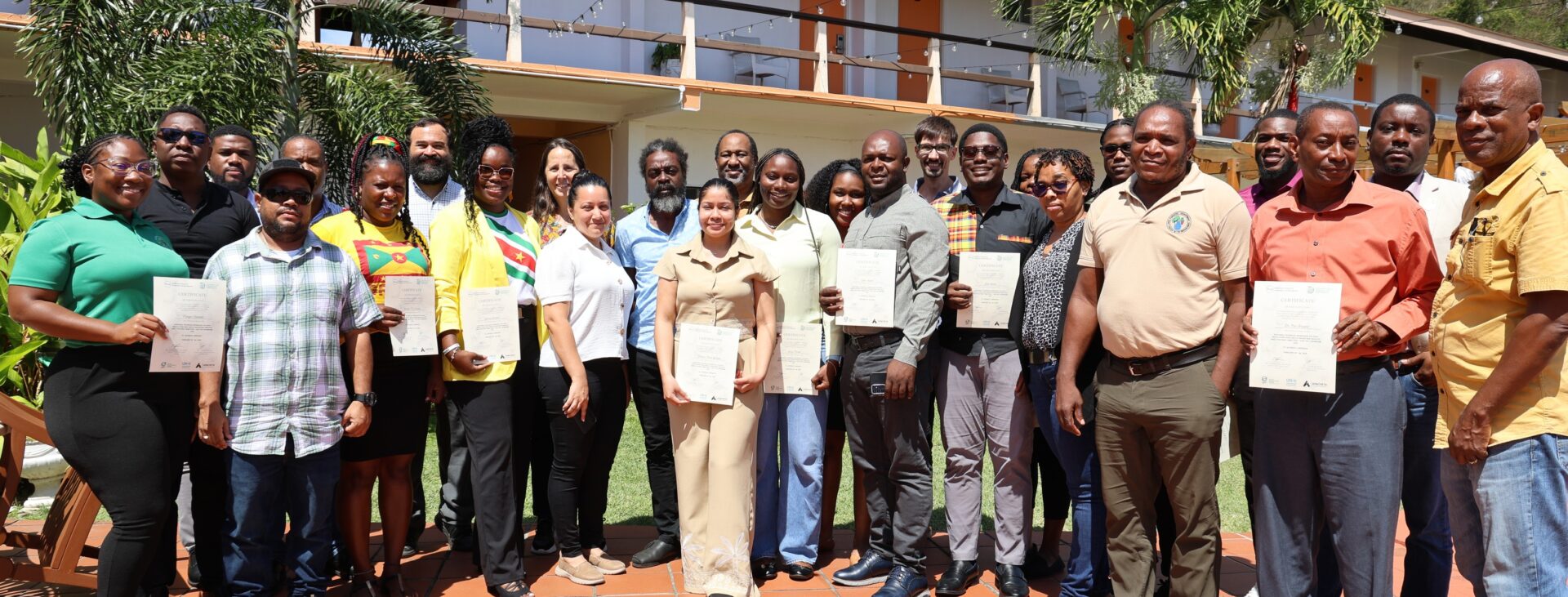
Environmental specialists from Caribbean Small Island Developing States (SIDS) concluded an intensive five-day training program in Grenada on February 6, 2026, marking a significant advancement in regional capacity for land management monitoring. The specialized workshop, held in St. George’s, focused on mastering high-resolution data analysis techniques and advanced assessment tools specifically for the forthcoming 2026 Performance Review and Assessment of Implementation System (PRAIS 4) reporting framework.
Organized through a collaborative effort between the Partnership Initiative for Sustainable Land Management (PISLM) and the United Nations Convention to Combat Desertification (UNCCD) Secretariat, the initiative received financial backing from the Global Environment Facility (GEF) with implementation oversight by the United Nations Environment Programme (UNEP). Regional organization APACHETA, dedicated to sustainable land use practices, provided additional collaborative support.
Zylenna Darson, PRAIS Reporting Officer at Suriname’s Ministry of Oil, Gas, and Environment, emphasized the transformative impact of the training on national data quality. “This workshop enabled crucial validation of our national data,” Darson stated. “Previously, Suriname depended on default global datasets that inadequately represented our specific land degradation challenges. This training has facilitated a more realistic and accurate representation of our country’s situation.”
The event transcended conventional technical training by establishing a dynamic platform for practical knowledge exchange and professional network development. Ayodele DeCosta, GIS Officer at St. Kitts and Nevis’ Department of Physical Planning, noted the training provided significantly more realistic assessments of land degradation phenomena compared to the generalized models typically applied to small island nations.
Eder Audate, UNCCD Focal Point and Director of Forests in Haiti, revealed that his country’s recent completion of a comprehensive national soil survey positions them to gather unprecedented detail about land resources. Audate expressed optimism that the acquired expertise would enable Haiti to conduct subsequent workshops and initiatives targeting land degradation.
Representatives from the Bahamas, Latonya Williams and Jenny Morris, projected that access to high-resolution data would substantially enhance both project development and policymaking processes, yielding more precise insights into land conditions.
The PISLM has encouraged participants to extend the application of their newly acquired expertise beyond PRAIS 4 reporting requirements to inform broader environmental policy frameworks. This capacity-building initiative underscores the indispensable role of precise data collection, strengthened regional cooperation, and shared learning methodologies in addressing the unique land degradation challenges confronting Caribbean SIDS.