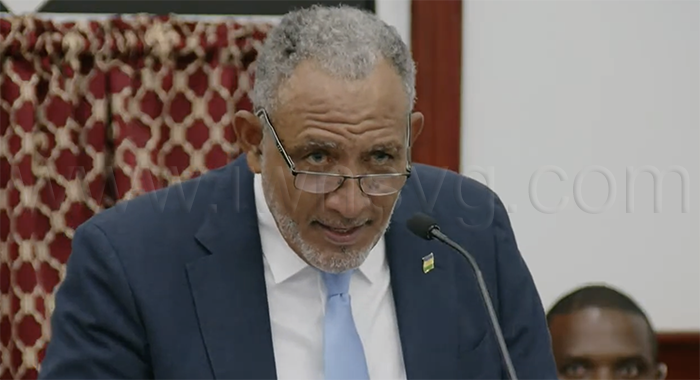
The Parliament of St. Vincent and the Grenadines commenced deliberations on Tuesday regarding a substantial EC$1.9 billion fiscal package, presented by Prime Minister and Finance Minister Godwin Friday. This budget marks the inaugural financial blueprint from the New Democratic Party administration since assuming power on November 27.
In a significant departure from traditional budget approaches, the government explicitly ruled out implementing new taxes. Instead, the administration unveiled a comprehensive strategy centered on enhancing revenue collection through systemic reforms rather than increasing tax rates. The cornerstone of this approach involves addressing substantial revenue leakage from import concessions and property tax inefficiencies.
Prime Minister Friday revealed startling figures regarding import concessions, disclosing that EC$624.1 million in potential revenue was forgone between 2022 and 2025—equivalent to 30% of the total value of concessional imports. The situation reached critical levels in 2025 alone, with EC$152.3 million in uncollected revenue representing 64% of all revenue collected from import taxes and charges.
The government proposed a 20% reduction in total import concessions applied uniformly across categories, which would generate an estimated EC$30.4 million in additional annual revenue. This approach emphasizes targeted priority sectors, tighter eligibility criteria, and stronger oversight rather than outright abolition of concessions.
Simultaneously, the administration identified property tax reform as another critical pillar of revenue enhancement. The current valuation system, based on a 2013 property assessment despite significant market changes, has resulted in systematic undervaluation, erosion of the tax base, and persistent revenue leakage. The government announced plans for a nationwide property registration program and comprehensive national property revaluation exercise.
Additional modernization efforts include full digitization of tax administration through the Tax Information Management System (TIMS) and development of the Vincy Single Window for Trade Facilitation (VSWiFT), which will integrate 16 trade-related government agencies into a single digital interface. These administrative reforms aim to enhance revenue collection through improved governance rather than higher tax rates.
Opposition Leader Ralph Gonsalves is scheduled to lead the Budget Debate response, setting the stage for parliamentary discussions on this comprehensive fiscal strategy.