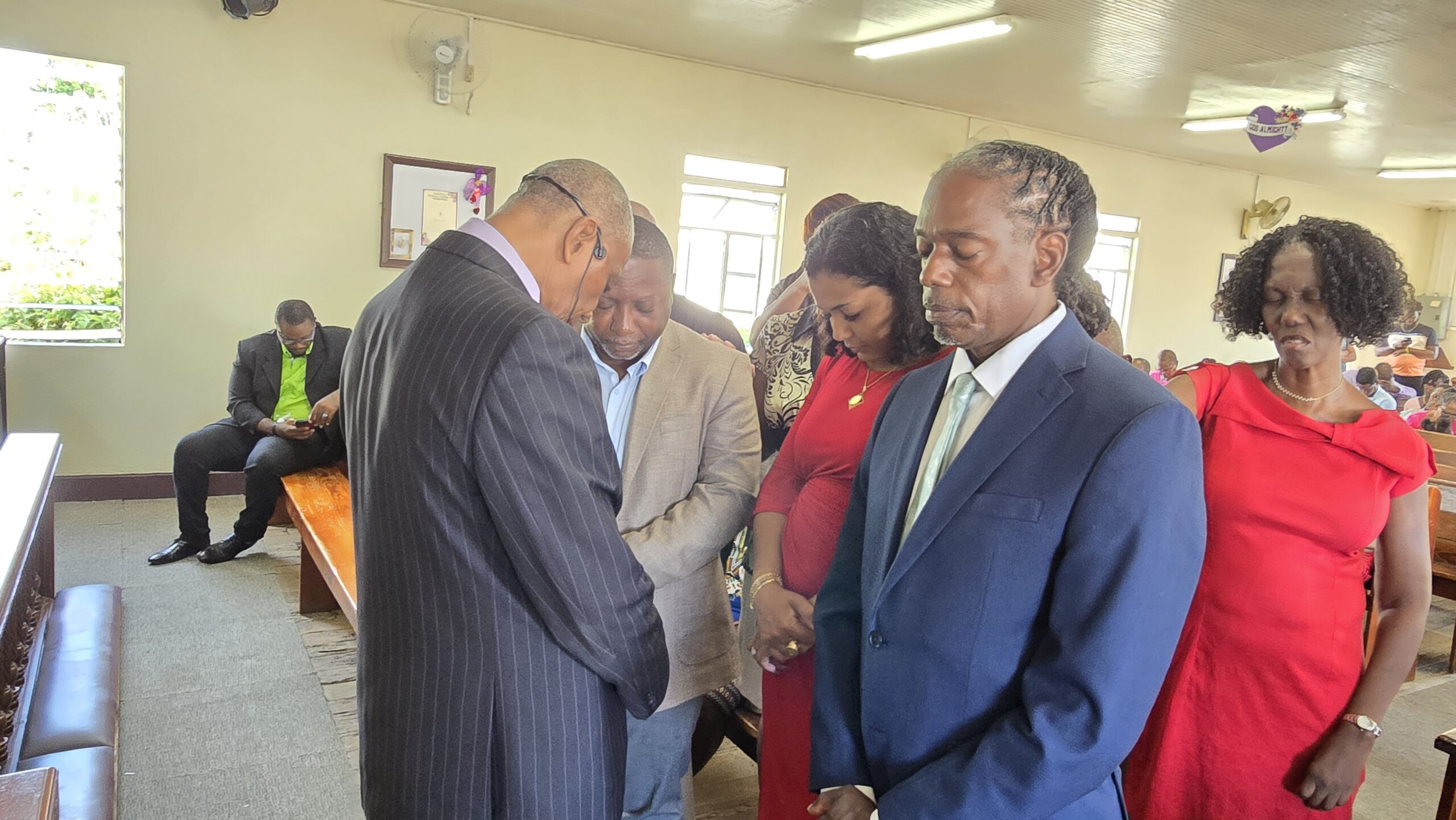
In a rare display of spiritual unity preceding political competition, three parliamentary candidates for St Michael Central convened at the Better Life Assembly Christ Union Church this Sunday. Representatives from Barbados’s major political factions—Tyra Trotman (BLP), Raymond Wiggins (FOD), and Andre Worrell (DLP)—sought divine blessing and congregational support, outlining distinct policy priorities during a shared worship service.
Bishop Joseph Atherley and Reverend Erskine Branch presided over the ceremony, offering prayers for the candidates before each addressed the Hindsbury congregation. The event highlighted how faith intersects with political campaigning in Barbadian democracy, though each candidate presented contrasting approaches to social development.
BLP candidate Tyra Trotman emphasized her party’s tangible commitment to religious institutions, referencing a manifesto pledge of $5 million in funding for faith-based organizations. “This government recognizes the divine work you perform,” she declared, framing the financial commitment as evidence of a governance model “putting God first.” Trotman supplemented policy promises with personal testimony, describing her journey from “walking a very dark path” to redemption. Positioning herself as a testament to transformative grace, she urged youth to reclaim spiritual guidance as a moral compass.
FOD contender Raymond Wiggins prioritized systemic reforms targeting youth vulnerability and elderly neglect. He proposed early psychological screening in primary schools to identify learning disabilities and mental health challenges, arguing intervention could “keep children out of prisons and funeral homes.” Wiggins advocated educational restructuring to integrate vocational training into secondary curricula, specifically referencing earlier access to programs at the Samuel Jackman Prescod Institute. For elderly care, he proposed repurposing underutilized community centers as intergenerational gathering spaces.
DLP representative Andre Worrell called for collaborative partnerships between churches and elected officials. He envisioned religious institutions hosting youth development initiatives focused on sports and career readiness, while empowering seniors as mentors. Acknowledging constituent skepticism toward politicians, Worrell asserted his motivation stemmed from faith and communal concern: “I recognize that together we can achieve more.”
Bishop Atherley concluded the service with a transcendant message, urging attendees to pursue aspirational goals grounded in divine trust. His homily encouraged moving beyond “limited, confined spaces” while recognizing spiritual sovereignty in temporal achievements.