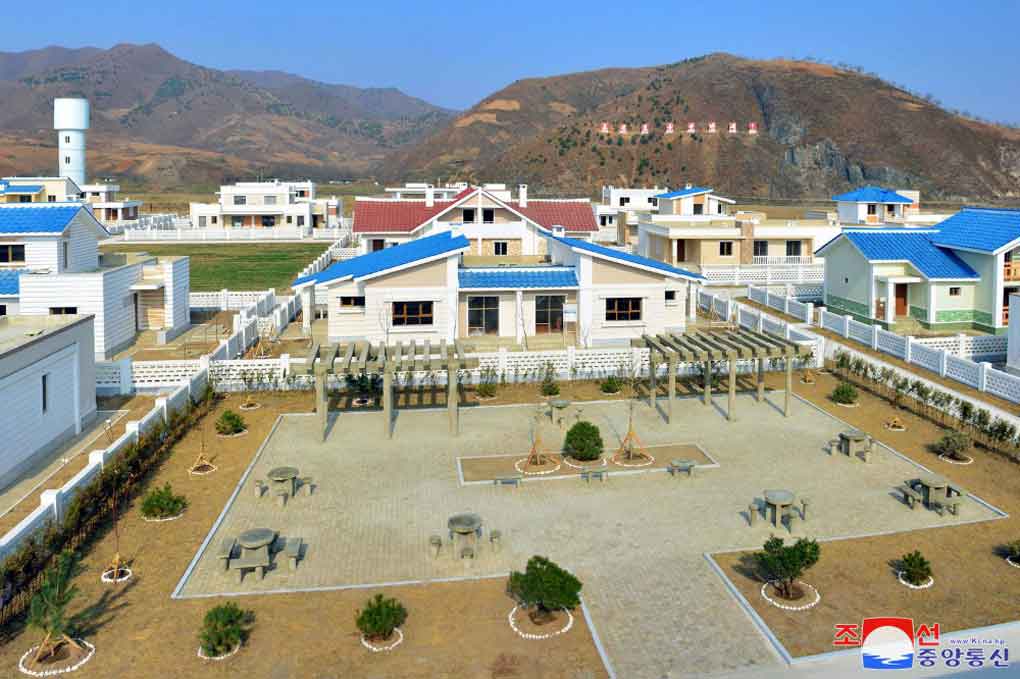
The Democratic People’s Republic of Korea has initiated a sweeping rural transformation program under the direct supervision of General Secretary Kim Jong Un. This strategic initiative, branded as the “new era rural revolution,” represents a significant nationwide effort to overhaul North Korea’s agricultural infrastructure and living conditions.
Kim Jong Un, serving as Chairman of State Affairs, has personally overseen and guided the construction of new rural housing developments, characterizing the project as both strategically vital and essential for national development. The program has mobilized substantial human resources across multiple provinces, with workers participating in material transportation, logistics coordination, and construction implementation.
According to reports from the Korean Central News Agency (KCNA), the project encompasses numerous localities including Tanchon, Jongju, Songrim, Manpho, Hoeryong, Anju, Unsan district, and the municipalities of Rangnang, Mangyongdae, and Kangso. These areas have established specialized construction brigades composed of skilled workers operating with reported efficiency.
The architectural planning demonstrates consideration for regional geographical variations, with construction teams in Nampho City and South Hwanghae, Kangwon, and North Hwanghae provinces adapting designs to accommodate coastal, flatland, and mountainous terrain characteristics. Beyond structural development, the program incorporates extensive environmental beautification efforts through the planting of diverse tree and flower species.
This comprehensive approach aims not merely to improve housing conditions but to fundamentally modernize North Korea’s entire rural sector, integrating these areas into contemporary development standards while potentially enhancing agricultural productivity and community sustainability.