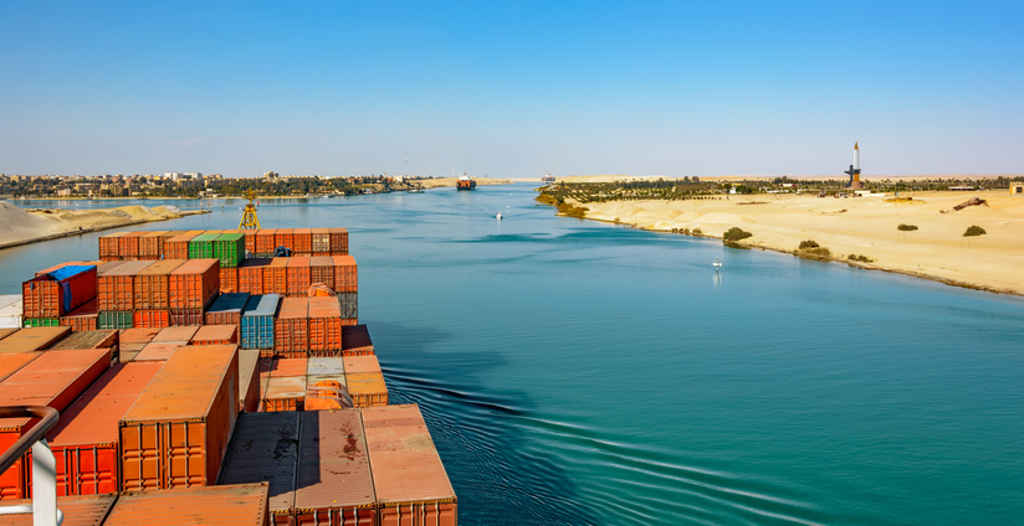
The Suez Canal Authority (SCA) has reported a remarkable financial and operational resurgence, with Chairman Osama Rabie revealing substantial growth across key metrics. According to statements published by Al-Ahram newspaper, the strategic waterway witnessed a 24.5 percent surge in revenue, accompanied by a 9.0 percent increase in vessel traffic and a significant 24.2 percent rise in total tonnage transited during the reported period.
Further amplifying this positive trend, Chairman Rabie disclosed that revenue figures for the most recent month alone demonstrated an 18 percent growth compared to the same month in the previous year.
This robust recovery is directly attributed to a significant de-escalation of regional geopolitical tensions. The SCA chief explicitly linked the canal’s improved performance to the ceasefire established in the Gaza Strip, which has successfully renewed confidence among major international shipping lines and carriers. This marks a stark reversal from the preceding months of disruption.
Previously, the canal’s operations were severely hampered by security challenges in the Red Sea. Attacks orchestrated by Yemen’s Houthi rebels, operating under the Ansar Allah movement, targeted commercial shipping. While initially focused on vessels linked to Israel, the campaign expanded to include ships associated with various nations and companies, regardless of their connections. This compelled numerous ship owners and operators to abandon the Suez Canal—a conduit for up to 12 percent of global maritime trade—in favor of longer and more expensive alternative routes around the Cape of Good Hope.
Consequently, Egypt, which relies heavily on canal tolls as a critical source of foreign currency revenue, emerged as one of the nations most adversely affected by the Red Sea crisis. The recent return to stability has therefore provided a vital economic reprieve for the North African country.