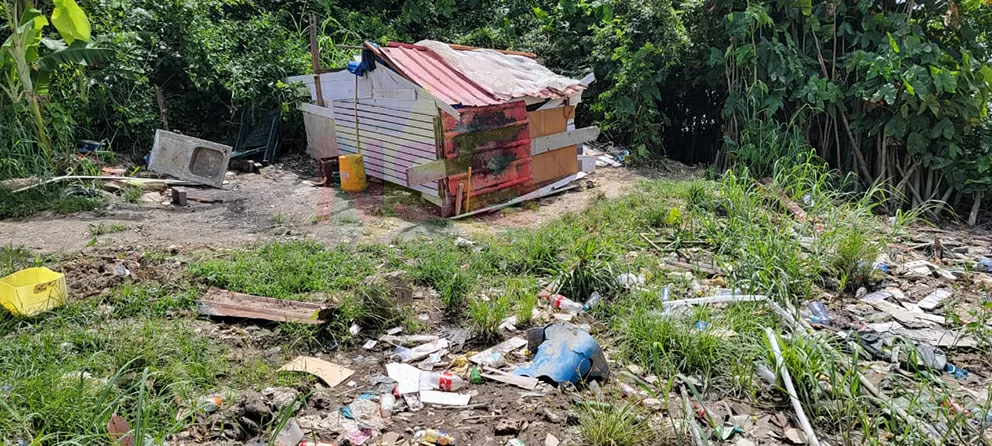
PARAMARIBO – In a startling urban development, Suriname’s capital is witnessing the emergence of its first favela-style settlement at the Waterkant, one of the city’s most prestigious addresses. What began as an informal structure has evolved into a symbol of systemic failure in urban planning and social responsibility.
The settlement offers residents unparalleled natural surroundings: mangrove forests teeming with nesting waterbirds provide continuous musical accompaniment, while the Suriname River flows merely five meters from doorsteps. All construction materials were creatively sourced at no cost, and residents enjoy free access to water and electricity without utility payments. The central location provides immediate access to urban services and constant social interaction.
However, this seemingly ideal existence comes with severe compromises. The area is plagued by massive pollution from discarded plastic bottles and waste indiscriminately dumped by passersby. The lack of environmental enforcement has created an ecological disaster zone where moral responsibility appears nonexistent.
Urban experts recognize this development as Suriname’s first true favela – informal settlements typically associated with Brazilian cities. These communities typically lack official permits, basic infrastructure, and access to essential services including clean water, sanitation, and reliable electricity. They represent poverty cycles, social exclusion, and institutional neglect, often accompanied by increased crime and public health challenges.
The most alarming aspect is the location’s visibility. Hundreds of citizens and officials pass daily without intervention, raising questions about governmental awareness and responsibility. The settlement didn’t appear overnight but developed gradually through layered construction, making the lack of response particularly concerning.
Urban planner Indra Toelsie condemns the situation: ‘This isn’t mere negligence but complicity. The Waterkant isn’t a garbage dump to ignore but a mirror reflecting our collective responsibility. Stop looking away. Act now or accept that we’re betraying our city and its people.’
The favela’s emergence signals critical failures in affordable housing provision, regulatory enforcement, and environmental stewardship. It represents both a cry for help and a warning about urban inequality reaching Suriname’s most valued spaces.