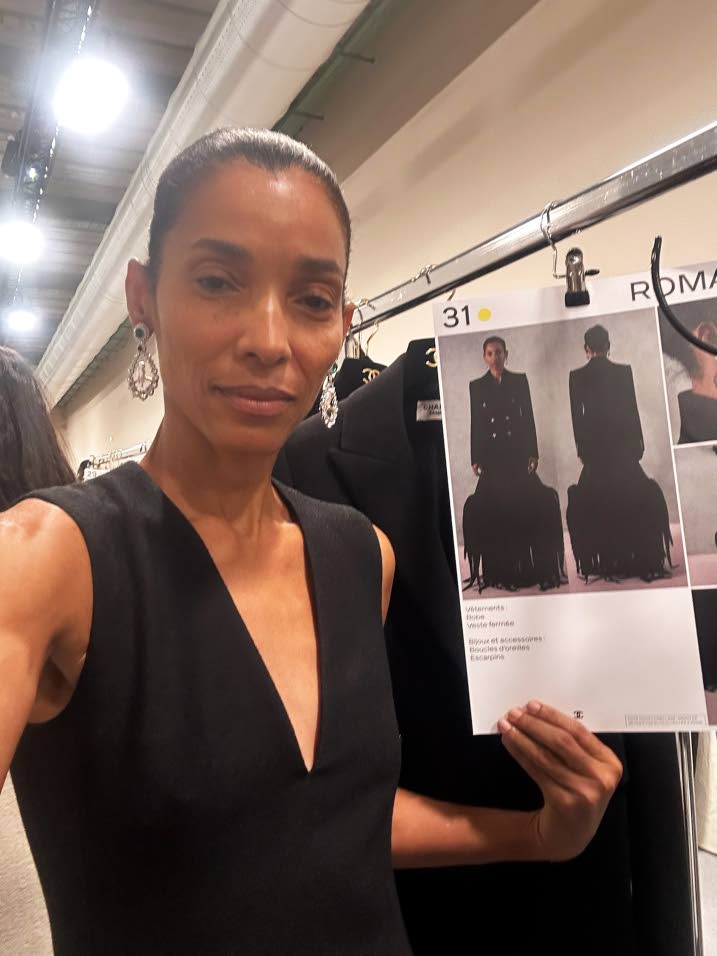
The air in the Chanel atelier crackles with creative energy as Creative Director Mathieu Blazy makes a decisive gesture. “We’ll cut right here,” he declares, tracing a line down the center front of the dress with surgical precision. This moment captures the meticulous craftsmanship behind Look 31 for Chanel’s Spring-Summer 2026 Haute Couture collection—a garment that would become a profound personal and sartorial journey for Jamaican model Romae Gordon.
The creation process unfolds as a ballet of expertise, where seasoned craftswomen with decades of experience transform wool and silk into high art. Scissors glide through fabric with instinctive accuracy while pins magically arrange themselves into geometric patterns under skilled hands. This is where fantasy meets technical perfection in the hallowed halls of French fashion.
For Gordon, the experience became deeply personal. Between fittings where Sam Cooke’s ‘A Change Is Gonna Come’ provided the soundtrack, she found herself reflecting on recent personal tragedies—the loss of six loved ones throughout 2024-2025. The creative process mirrored her own journey of transformation, with the garment’s evolution representing her personal metamorphosis.
The final creation embodies both strength and delicacy: a groundbreaking little black dress cut mid-thigh, molded to the body beneath a double-breasted crêpe de laine jacket. The only hint of color comes from distinctive green bird buttons that complement the feather-like pleats of organza de soie at the hem, creating an illusion of flight and movement throughout the garment.
Backstage, moments of levity emerged as Jamaican and French sensibilities collided. When head workshop manager Christine Mendy and her colleague Paula Braz offered deadpan French humor about language barriers, the resulting laughter provided necessary relief from the intense pressure of Blazy’s couture debut preparation.
The philosophical dimensions of fashion revealed themselves through conversations with Pierre Olivier Agostini, Chanel’s senior research designer, who discussed the anthropology of clothing—why women choose certain garments and what narratives they convey through their sartorial selections.
On show day at the Grand Palais, the ethereal set featured soft blush-colored weeping willows and mushrooms (declared ‘Champignons de l’amour’ by the French), creating a dreamscape where Mary Costa’s ‘I Wonder’ blended with Nelly Furtado’s ‘Flames to Dust’ and mashups of The Verve and Oasis. The music echoed themes of fantasy, love, tragedy, and redemption that mirrored both the collection and Gordon’s personal journey.
As Gordon made her first international runway appearance in over thirty years, Look 31 represented more than fashion—it embodied transformation, resilience, and the magical convergence of personal history with artistic creation. The garment, accessible and wearable for women of any age, carried layers of meaning that transcended its impeccable craftsmanship, marking both a career milestone and personal redemption for the model who brought it to life.