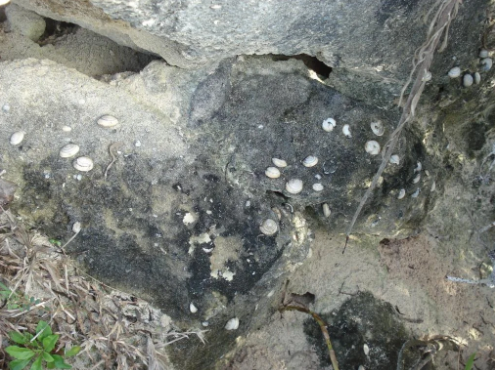
In a landmark conservation achievement, the greater Bermuda land snail—a species once presumed extinct—has been successfully revived from the brink of disappearance through a collaborative international effort. Chester Zoo in the United Kingdom announced the breakthrough this week, marking a rare victory in global biodiversity preservation.
The rediscovery journey began in 2014 when researchers identified living specimens in an alleyway of Hamilton, Bermuda’s capital. This finding sparked an urgent rescue mission involving conservation specialists from Chester Zoo, London Zoo, and Bermudian authorities. The snails were transported to specialized breeding facilities in northwest England, where experts meticulously cultivated population numbers over several years.
By 2019, thousands of snails were reintroduced to their native habitat. Recent research published in the Oryx biodiversity conservation journal confirms that six established colonies are now thriving across the archipelago. Gerardo Garcia, Director of Animals and Plants at Chester Zoo, described the achievement as “massive,” noting that such conservation successes occur perhaps “once or twice in a conservationist’s entire career.”
The greater Bermuda land snail represents an evolutionary relic with ancestry dating back over one million years. Its survival had been threatened by multiple factors including habitat destruction, pesticide application, and predation by invasive wolf snails—a cannibalistic species that preys on native snails.
At the project’s peak, conservationists managed approximately 60,000 snails in captivity, requiring dedicated care and specific dietary regimens. Katie Kelton, a lead keeper, recounted the substantial effort involved: “It was a lot of snails to look after… a lot of chopping lettuce, sweet potato and carrot.”
While long-term survival depends on ongoing habitat restoration initiatives by the Bermudian government, researchers have developed effective methodologies for rapid population recovery. The conservation team has now shifted focus to the lesser Bermuda land snail—an even smaller species that may be extinct in the wild—applying lessons learned from this successful program.
Dr. Iri Gill, a conservation scientist involved in the project, emphasized that although tiny, these snails represent “one of the biggest success stories in conservation,” demonstrating that dedicated scientific intervention can reverse biodiversity loss.