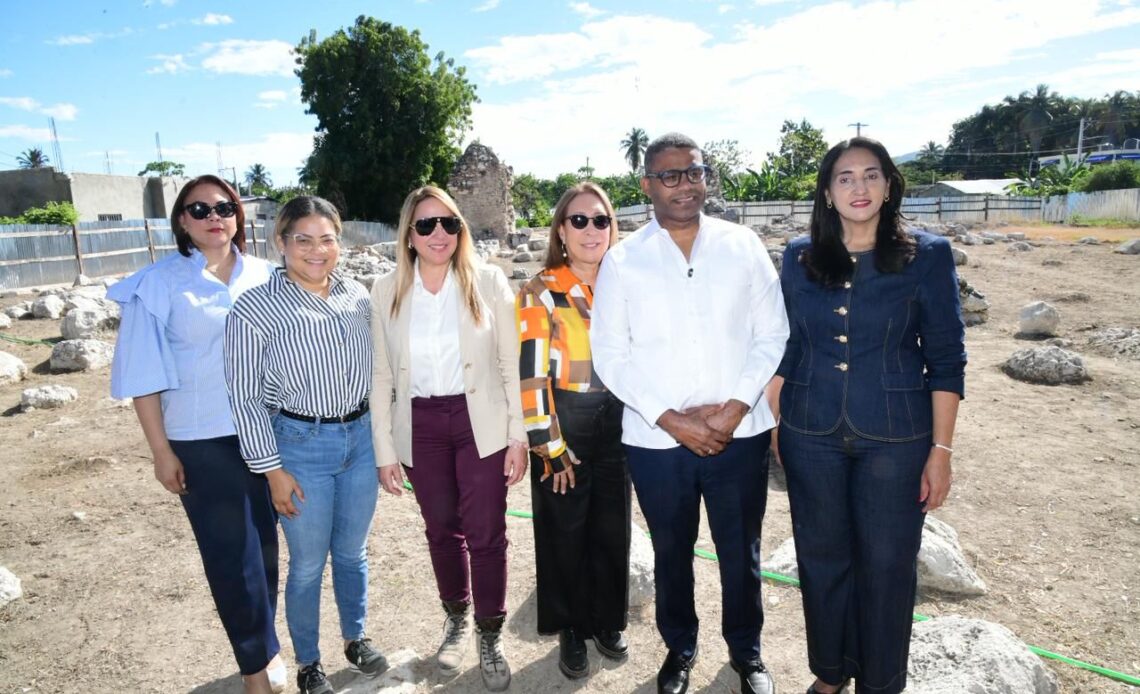
A multinational team of distinguished archaeologists and historical researchers has relaunched excavations in Azua, Dominican Republic, as part of the ambitious “Following the Remains of Enriquillo” initiative. Spearheaded by the Macarrulla Foundation in partnership with the General Directorate of Strategic and Special Projects of the Presidency (Propeep), the project aims to physically locate the burial site of Enriquillo, a legendary 16th-century Taíno cacique revered as a seminal figure of dignity and resistance against colonial forces.
The fieldwork, centered on the ruins of Pueblo Viejo, represents the latest phase in a decade-long investigative process. Project executive director Lidia Martínez de Macarrulla revealed an estimated investment of $1.5 million, funding a multidisciplinary approach that integrates historical archival research, cutting-edge archaeological digs, laboratory analysis, and sophisticated technology.
The scientific methodology employs satellite imagery to identify subsoil anomalies for precise excavation targeting, carbon-14 dating for chronological verification, and extensive reviews of international historical records to corroborate data. Martínez de Macarrulla emphasized the project’s profound cultural significance, stating it transcends pure archaeology to touch upon national historical memory and identity.
Robert Polanco, Director of Propeep, characterized the endeavor as a crucial move to fill a historical void in the material preservation of Enriquillo’s legacy. He underscored its role in fostering a more inclusive narrative of the Dominican Republic’s pre-Hispanic history, highlighting Enriquillo’s strategies of resistance and political negotiation.
Renowned Dominican archaeologist Kathleen Martínez, famed for her work in Egypt, is providing technical coordination for this phase. She leads a diverse team of specialists from the Dominican Republic, Egypt, and Spain, whose expertise spans archaeology, anthropology, osteology, and funerary studies. The project is anticipated to yield substantial contributions to academic scholarship and the safeguarding of the nation’s cultural heritage.