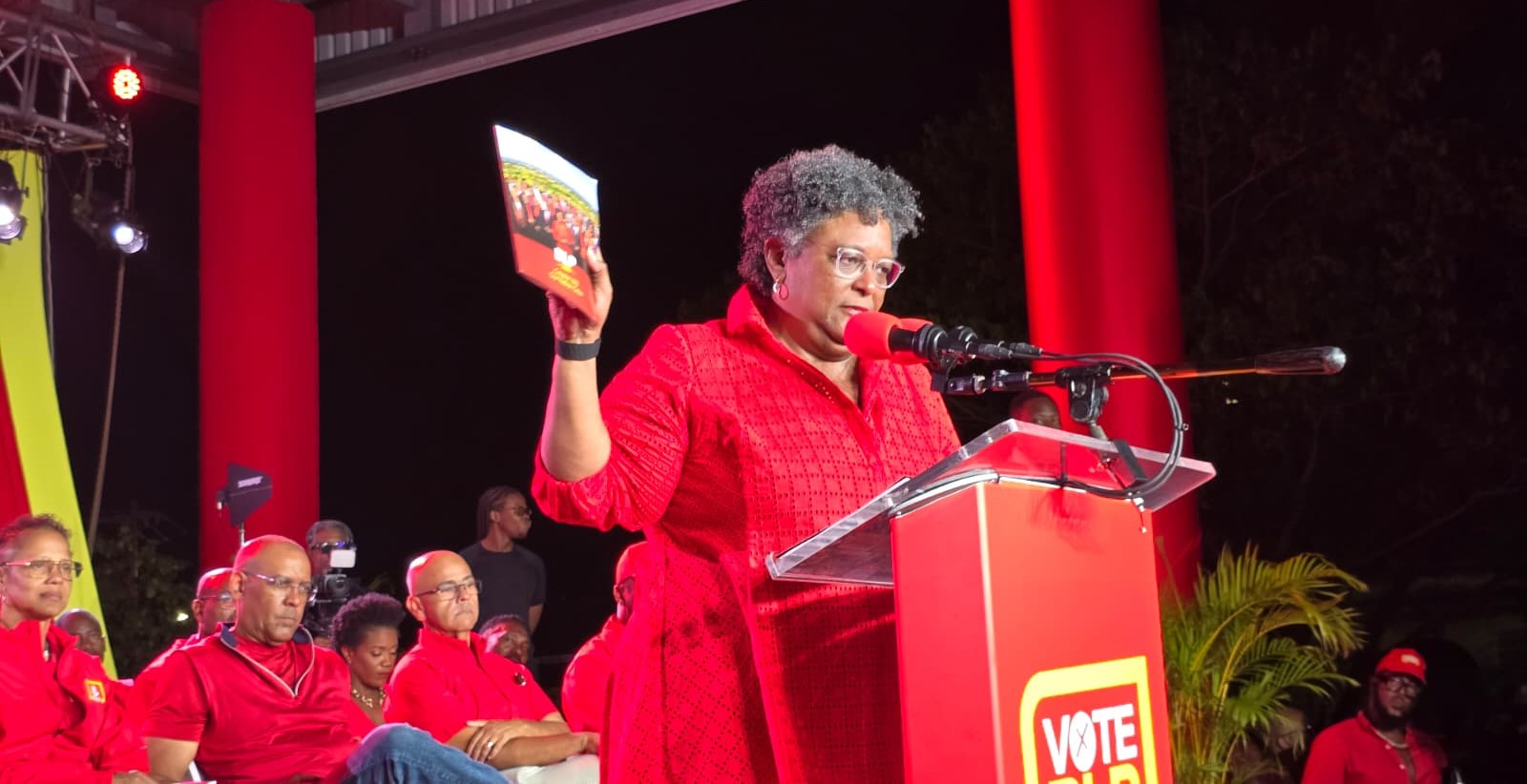
Prime Minister Mia Mottley’s Barbados Labour Party has unveiled an innovative economic relief strategy focused on direct cash transfers and tax credits rather than sweeping VAT reductions. The policy framework, presented during the party’s manifesto launch at Golden Square, represents a deliberate departure from conventional tax-cutting approaches favored by opposition parties.
The governing party’s plan introduces multiple targeted interventions: low-income households earning below $2,080 monthly will receive increased reverse tax credits of $1,700 annually, up from the previous $1,300. A newly created $750 credit will support middle-income earners making between $2,080 and $2,900 monthly—a demographic previously excluded from such benefits.
For pensioners, the administration proposes dramatically increasing the tax-free allowance from $50,000 to $75,000. Additionally, all pensioners, welfare recipients, and special needs grant beneficiaries will receive direct cash payments of $1,200 annually, addressable through flexible distribution schedules.
The government’s approach specifically counters opposition proposals to reduce VAT from 17.5% to 15%. Prime Minister Mottley characterized such blanket reductions as fiscally irresponsible, arguing that merchants might not pass savings to consumers while simultaneously creating budget shortfalls. Economic experts including Central Bank Governor Dr. Kevin Greenidge and Professor Troy Lorde have endorsed targeted approaches, warning that broad VAT cuts could undermine Barbados’ hard-won fiscal stability.
The relief measures, costed at approximately $142 million for pensioner benefits alone, form part of a comprehensive economic strategy building on policies implemented since 2018. The government emphasizes that these initiatives represent measurable, accountable commitments rather than theoretical economic adjustments.