In an era of escalating climate crises, environmental educator Faraaz Abdool proposes a radical shift in how we approach learning—by turning to nature itself as the ultimate classroom. Despite global efforts to implement environmental education, humanity continues its trajectory toward ecological catastrophe, suggesting fundamental flaws in our current educational paradigms.
The prevailing extractive mindset cultivated by modern education systems treats nature as a commodity to be harvested and exploited rather than a complex system to be understood and preserved. This approach produces professionals who value timber over forests, economic gain over ecological balance, and resource extraction over sustainability.
Abdool identifies our profound disconnection from natural systems as the core issue, manifested not just physically but cognitively—through diminished patience, avoidance of uncertainty, and manufactured fears of wild creatures. This separation has been carefully engineered through comfort-oriented lifestyles and sensationalized media portrayals of nature.
The solution proposed is both simple and revolutionary: begin reconnecting with nature through bird observation. Birds serve as ideal entry points to natural education due to their accessibility, diversity, captivating behaviors, and ability to command attention in an increasingly distracted world. They require no prior knowledge or equipment to appreciate, making them perfect ambassadors for the natural world.
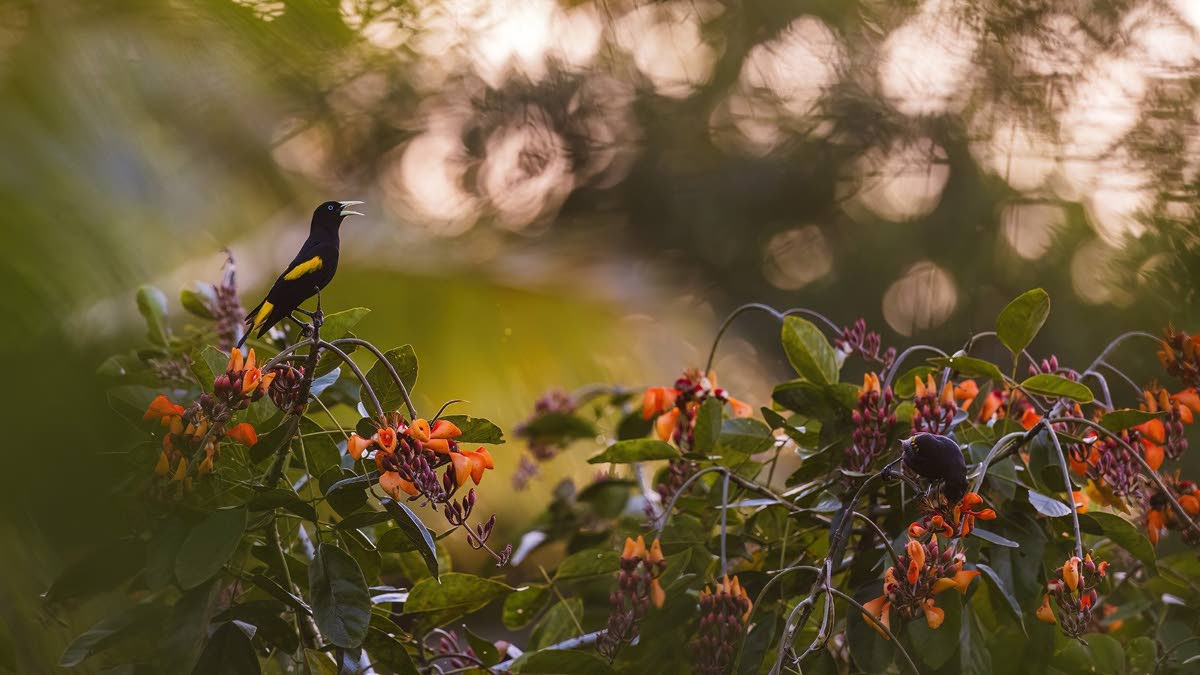
Through observing species like Trinidad and Tobago’s distinctive yellow-rumped caciques (locally known as ‘cornbirds’), students of nature can uncover complex ecological relationships. These birds flock to swamp immortelle trees during flowering season, attracting smaller birds like tanagers and hummingbirds. Later, parrots arrive to feed on seed pods, inadvertently assisting in seed dispersal. These observations reveal seasonal patterns, habitat preferences, and ecosystem functions that formal education often overlooks.
This nature-based learning generates practical wisdom that informs responsible decision-making—recognizing that swamp immortelle populations indicate seasonal flooding patterns and aquifer recharge zones, knowledge crucial for sustainable land use planning. Such insights surpass what conventional degrees offer and cannot be replaced by recycling initiatives or corporate sustainability rhetoric.
Abdool concludes that rekindling our connection to nature through simple observation represents our best hope for developing the ecological literacy necessary to navigate impending environmental challenges. This approach benefits not just children but lifelong learners seeking wisdom from nature’s infinite classroom.