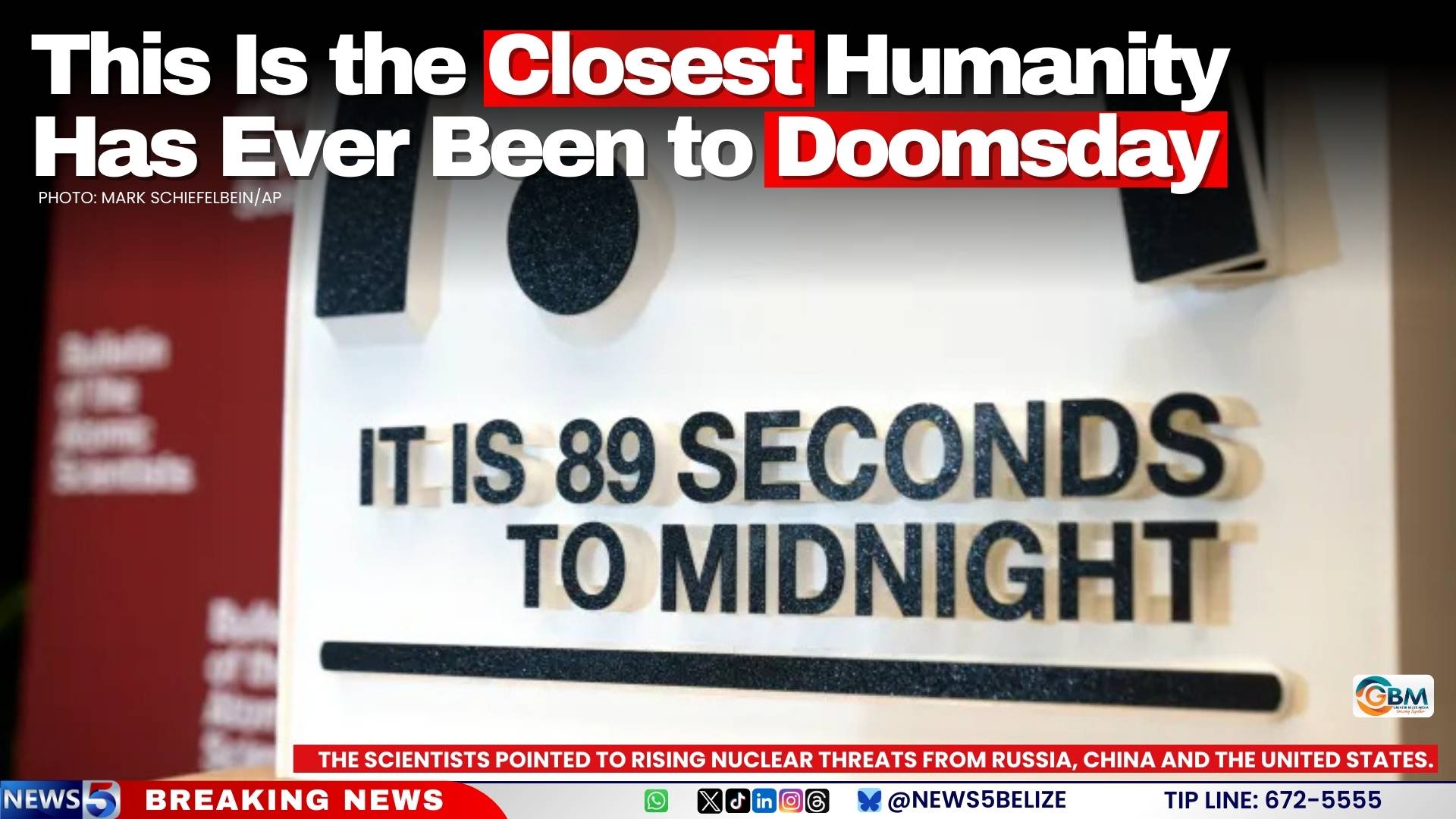
In a sobering announcement on January 28, 2026, the Bulletin of the Atomic Scientists has advanced the symbolic Doomsday Clock to a historic 85 seconds to midnight—the closest humanity has ever been to catastrophic annihilation in the device’s 79-year history. This adjustment moves four seconds closer to the apocalyptic benchmark than the previous year’s setting.
The Doomsday Clock, originally conceived in 1947 by a group of scientists including Albert Einstein during Cold War tensions, serves as a metaphorical warning system gauging humanity’s proximity to self-destruction. While initially focused on nuclear warfare threats, the clock’s parameters have expanded to incorporate multiple existential dangers including climate change, biological threats, artificial intelligence proliferation, and organized disinformation campaigns.
Current geopolitical developments have significantly influenced this year’s alarming adjustment. Scientists cited escalating nuclear posturing from Russia, China, and the United States, the systematic dismantling of international arms control agreements, ongoing conflicts in Ukraine and the Middle East, and the unregulated integration of artificial intelligence into military systems and information ecosystems.
Alexandra Bell, President and CEO of the Bulletin, expressed grave concerns about global leadership failures, stating that ‘the risk of nuclear use is unsustainably and unacceptably high.’ She noted that no major nuclear risk category demonstrated improvement throughout 2025, with renewed discussions about nuclear testing, proliferation concerns, and military operations occurring under nuclear threat environments.
Adding to the concerns, Nobel Peace Prize laureate Maria Ressa warned of an ongoing ‘information Armageddon’ fueled by increasingly sophisticated technologies including social media algorithms and generative AI systems. She emphasized that these technologies operate without factual anchoring, describing chatbots as ‘nothing but probabilistic machines’ that contribute to global instability through disinformation dissemination.