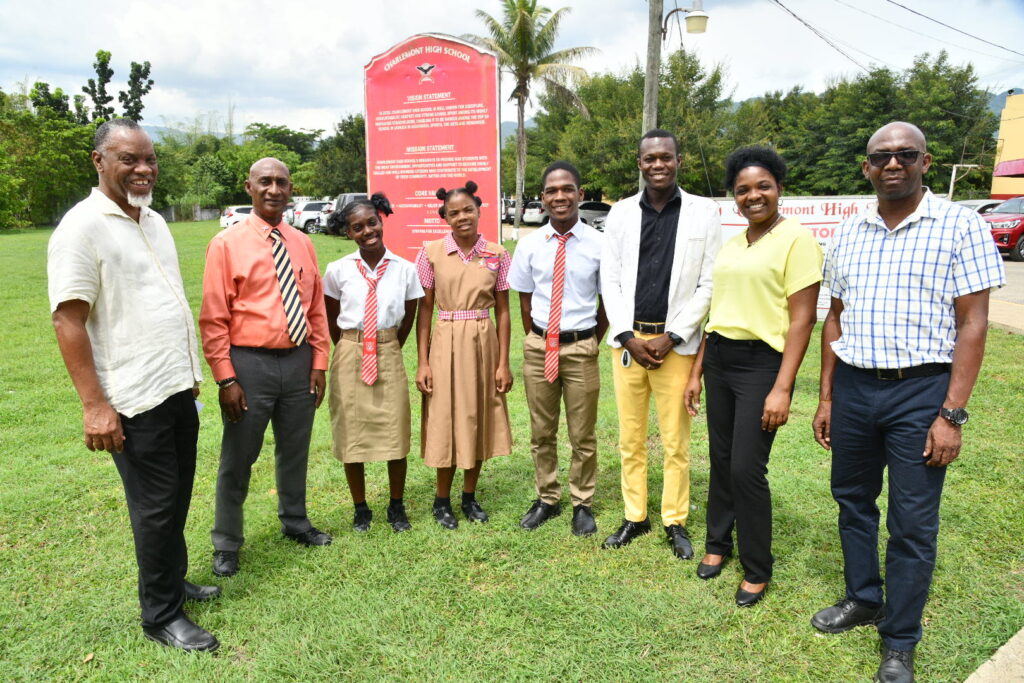
KINGSTON, Jamaica — Charlemont High School in St. Catherine has demonstrated remarkable academic progress, particularly in mathematics, following the recent Caribbean Secondary Education Certificate (CSEC) examinations. The institution’s mathematics pass rate surged dramatically from 16% to 36%, while maintaining an exceptional 81% success rate in English Language.
Principal Garth Gayle attributed this significant improvement to strategic interventions implemented through the Ministry of Education’s National School Learning and Intervention Plan (NSLIP). The program provided the school with a mathematics coordinator who established comprehensive mentorship programs for teachers and initiated a student ambassador initiative. “These initiatives have been instrumental in assisting our students through mathematics marathons and equipping teachers with specialized techniques to enhance student outcomes,” Gayle explained in an interview with JIS News.
The NSLIP was specifically designed to address learning deficiencies exacerbated by the COVID-19 pandemic, employing a targeted approach focusing on core subjects through supplemental lessons, summer programs, digital resources, and psychosocial support.
Mathematics teacher Sharlene Mills revealed that the department completely transformed its pedagogical approach. “Despite limited resources, we incorporated tangible objects and multimedia content into our lessons. Particularly for male students who respond well to visual stimuli, we integrated mathematics concepts into cartoon formats, which significantly increased engagement and comprehension,” Mills stated.
Through her role as president of the Quality Education Circle—a collaborative network of educational institutions within geographical areas—Mills identified innovative techniques including hands-on activities where students created visual representations of mathematical operations through coloring and diagramming.
Student testimonials underscore the program’s effectiveness. Kayda Lee McLean, who achieved a Grade 2 in mathematics despite initial difficulties, credited Mills’ persistent encouragement: “She guided me through problems I couldn’t solve and motivated me when I felt like giving up.”
Ernest Johnson, another mathematics department member, emphasized the conscious institutional decision to enhance mathematical instruction through Saturday classes, past paper marathons, and practical application workshops. “We deliberately made mathematics more relatable to real-life situations, which fundamentally changed student perception and performance,” Johnson noted.
School leadership, including Deputy Head Girl Briana Smith and Head Boy Jehvean Chambers, highlighted the supportive community environment and recognition systems that celebrate academic achievement. Discipline Dean Colin McDonnell further connected the academic success to maintained order and proper student decorum, with administrative leadership personally ensuring uniform standards each morning.
The collective efforts demonstrate how targeted educational strategies, teacher innovation, and institutional commitment can produce substantial academic improvements even in challenging circumstances.