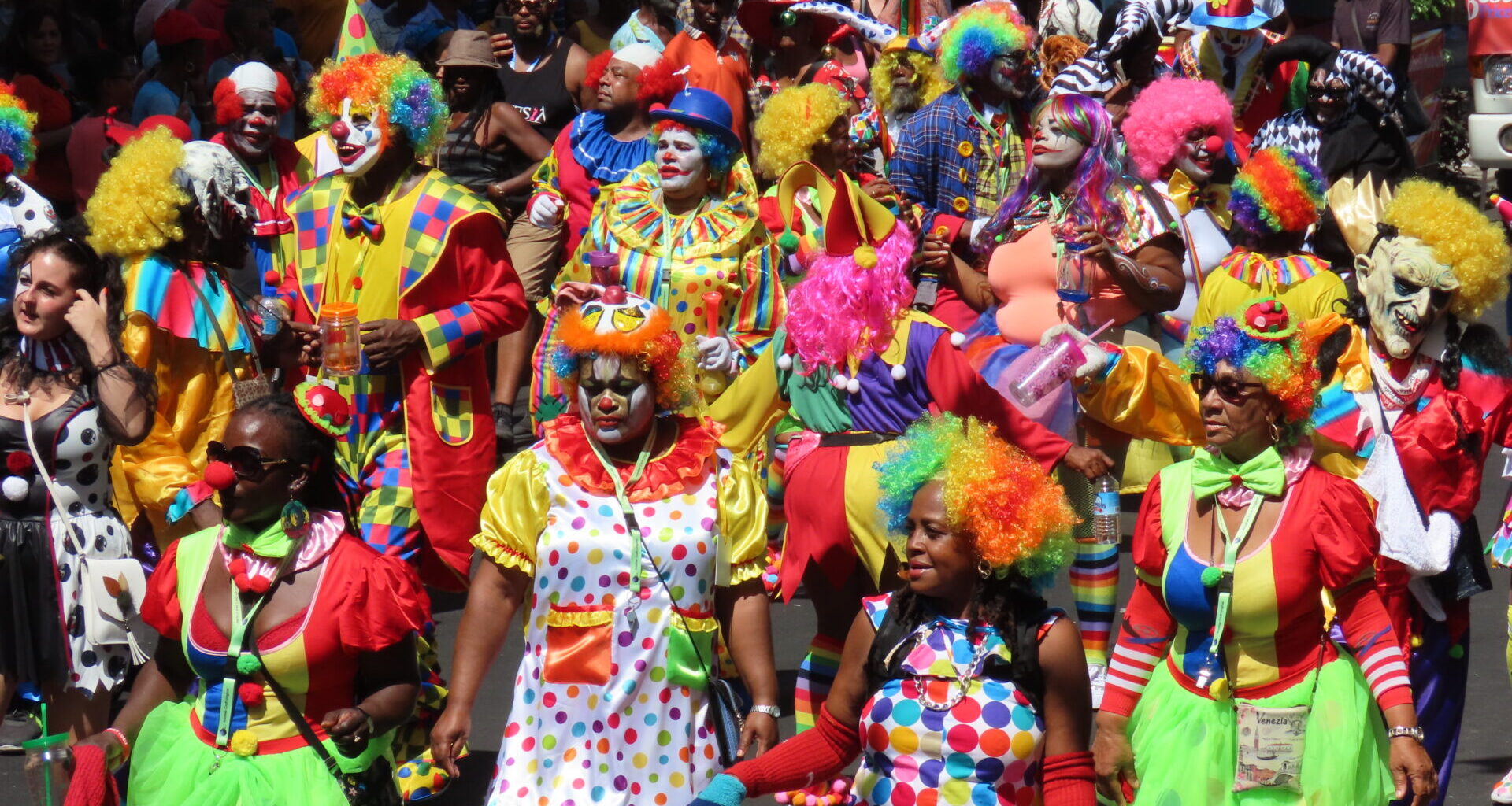
The rhythmic pulse of Dominica’s Carnival celebrations follows a complex chronological pattern that few revelers fully comprehend. Historical research reveals that the island’s pre-Lenten festivities, traditionally known as ‘Lendi Mas’ (Carnival Monday) and ‘Madi Mas’ (Carnival Tuesday), adhere to a celestial calendar with fluctuations spanning centuries.
According to archival records, the earliest possible dates for Dominica’s Carnival occur on February 2 and 3—a phenomenon last witnessed in 1818, during the pre-Emancipation era when Carnival celebrations didn’t officially exist. Astonishingly, this early timing won’t recur until 2285, making it a once-in-millennium occurrence.
Conversely, the latest possible Carnival dates fall on March 8 and 9, last observed in 1943. The next extended Carnival season will occur in 2038, requiring a 12-year wait for the longest possible celebration period.
A particularly rare phenomenon occurs when Carnival straddles two months—with Monday in February and Tuesday in March. This occurred most recently in 2022 (had COVID-19 not caused cancellation), following previous instances in 1927, 1938, 1949, and 1960. Analysis reveals an 11-year pattern between these dual-month celebrations, with future occurrences projected for 2033 and 2044—the latter being a Leap Year celebration on February 29 and March 1.
The timing complexity extends to Easter celebrations, which shift according to lunar cycles. Easter Sunday always falls on the first Sunday after the first full moon following March 21. The earliest possible Easter date (March 22) last coincided with early Carnival dates in 1818, and won’t realign until 2285.
Despite these chronological complexities, Dominicans continue celebrating their ‘Mas Domnik’ with equal enthusiasm whether festivities fall in February, March, or across both months—demonstrating that cultural spirit transcends calendar constraints.