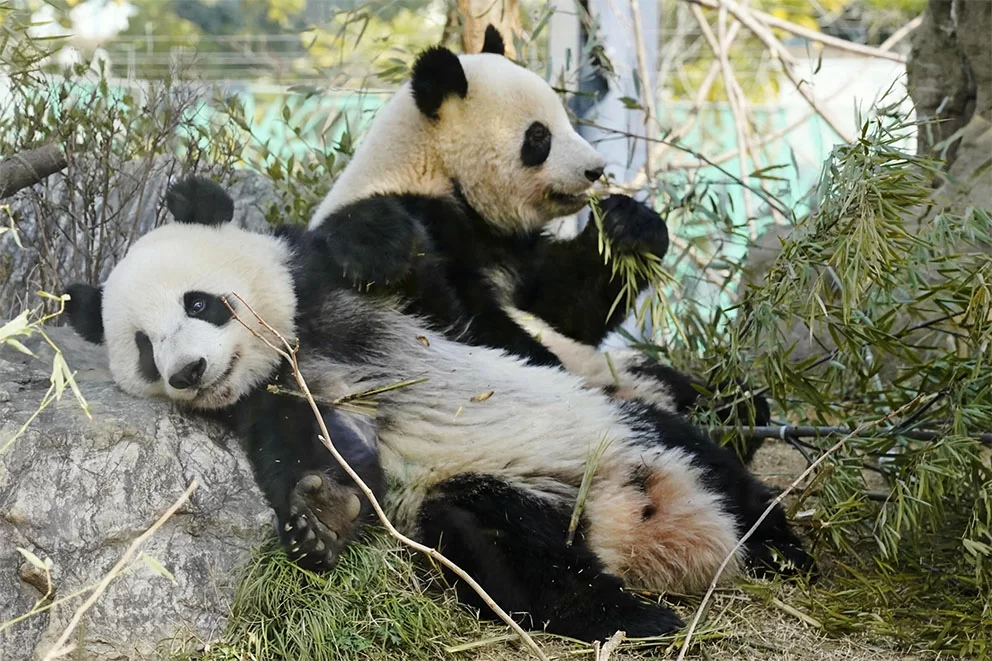
Tokyo’s Ueno Zoo witnessed emotional farewells Sunday as panda enthusiasts gathered for the final public viewing of twin giants Xiao Xiao and Lei Lei before their scheduled return to China this week. Their departure marks a historic moment: Japan will experience its first panda-less territory in half a century, with replacement prospects appearing dim amid deteriorating diplomatic relations between Tokyo and Beijing.
The panda diplomacy legacy began in 1972 when China gifted the first bears to Japan following the normalization of diplomatic relations between the historically wary neighbors. These charismatic black-and-white creatures immediately captured Japanese affections, with a dozen subsequent pandas achieving national celebrity status.
Despite the zoo’s implementation of a strict one-minute viewing limit, the final exhibition attracted massive crowds. Visitors carrying panda plush toys called the bears’ names and captured smartphone photos as the twins nibbled bamboo and roamed their enclosure. Many without reserved tickets still visited the zoo to participate in the symbolic farewell day.
Longtime panda devotee Michiko Seki, wearing panda-print black-and-white attire, expressed satisfaction at seeing the twins healthy and feeding well. She documented the moment using the same camera purchased two years earlier to photograph their elder sister Xian Xai before her departure.
“These animals provide immense comfort,” Seki noted. “Japan needs pandas, and I hope politicians can find some solution.”
Beijing maintains ownership of all pandas loaned to foreign nations, including any offspring born abroad. Xiao Xiao and Lei Lei were born at Ueno Zoo in 2021.
When questioned about potential new panda exchanges, Chinese Foreign Ministry spokesperson Guo Jiakun stated: “I know giant pandas are beloved by many Japanese people, and we welcome Japanese friends to visit them in China.”
Japan currently faces escalating political, trade and security tensions with China. Recent remarks by Japanese Minister Sanae Takaichi regarding potential intervention in Taiwan scenarios provoked particular anger from Beijing. The relationship further strained as Japan’s consulate in Chongqing has operated without a consul for months due to China’s delayed approval of replacement diplomats.
Economists project significant financial repercussions from the pandas’ absence. Kansai University economics professor Katsuhiro Miyamoto estimates approximately 20 billion yen ($128 million) in annual losses, warning that prolonged absence could create economic impacts measuring in tens of billions of yen.
Panda imagery permeates Japanese culture around Ueno Zoo, appearing on confectionery, stationery, plush toys and photobooks. Local souvenir shop manager Asao Ezure considers pandas “a symbol of Ueno, a star” while expressing concern about business impacts. Despite the uncertainty, he maintains hope for their return, refusing to alter store signage featuring the twin pandas.
The current situation represents a notable shift in China’s panda diplomacy strategy, which began with gifts to Western nations during the 1970s normalization era before transitioning to lease programs in the 1980s. Japan previously experienced diplomatic panda complications when a planned transfer to Sendai following the 2011 earthquake and tsunami was suspended during territorial disputes in 2012.