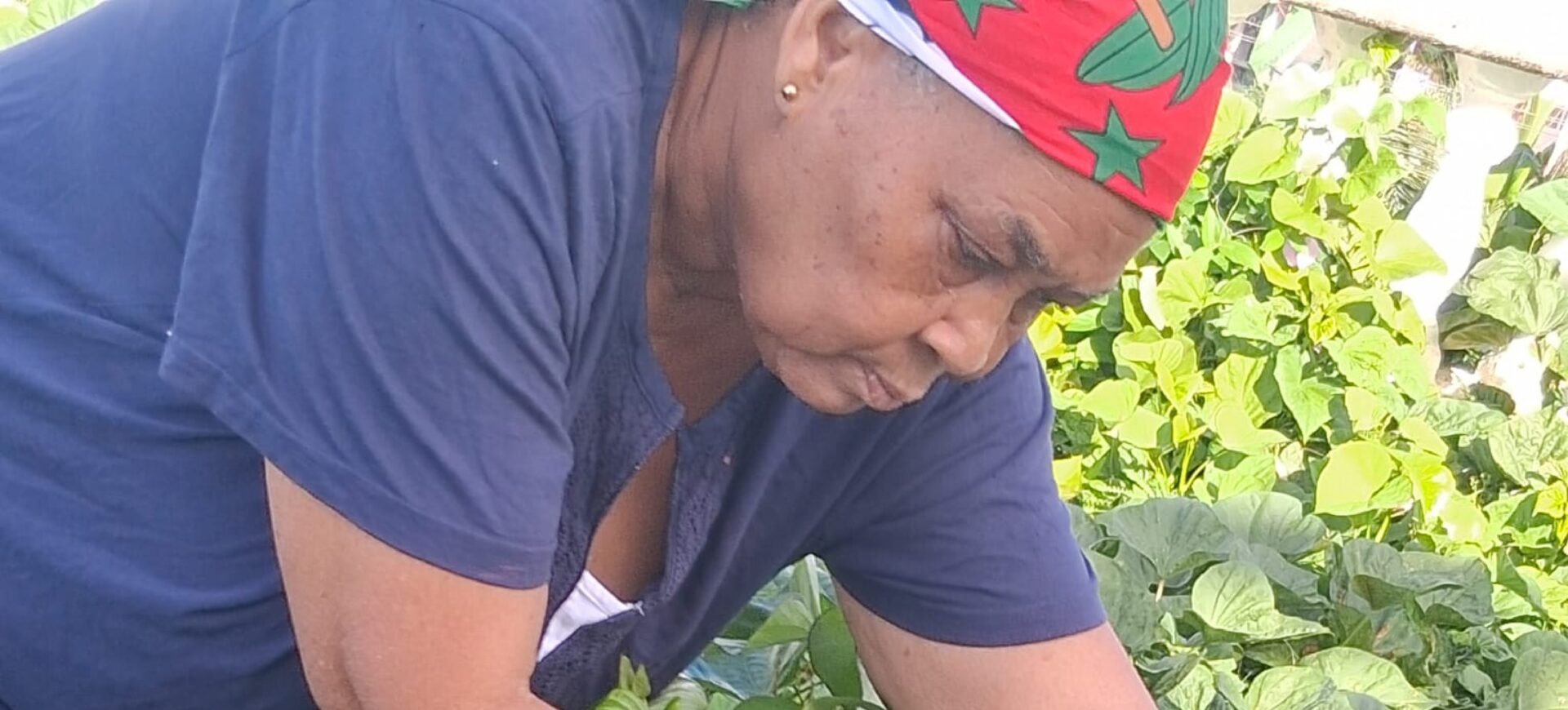
ROSEAU, Dominica – From her roots in a western coastal community where fishing and agriculture defined existence, Vanya David has emerged as a formidable advocate for gender equality and sustainable development. The President of the Dominica National Council of Women draws inspiration from her family heritage—a fisherman father and farming mother—which instilled in her the core philosophy: “What you need to eat is what you grow.”
Leading an organization with decades of impact, David coordinates crisis prevention, community strengthening, and technical training programs in partnership with Dominica’s Ministry of Agriculture and the Inter-American Institute for Cooperation on Agriculture (IICA). Her dedication recently earned her the prestigious Soul of Rurality award from IICA, recognizing her influence in advancing food security and sustainability across the Americas.
Yet David’s vision is grounded in practical challenges. She highlights rural transportation as a critical barrier, especially for women seeking economic independence. Limited road access complicates market connectivity, increasing costs and reducing profitability. Climate volatility further strains agricultural stability, with rapid shifts between sun, rain, and wind demanding careful crop planning.
Supported by national and international agencies, greenhouse initiatives are gradually improving resilience in suitable regions. David emphasizes that successful farming requires not only planting skills but also astute climate adaptation. Her work also extends to fisheries, training women in safe fishing practices and fish conservation while addressing logistical hurdles in product distribution.
Addressing youth engagement, David notes that land access, startup financing, and modern tools are essential to attract new generations to agriculture. She contrasts nutrient-rich local produce with processed convenience foods dominating urban diets, advocating strongly for local production as a path to better nutrition.
Despite acknowledging the hardships of rural life—infrastructure gaps, climate setbacks, and market barriers—David unwaveringly promotes farming as a source of autonomy, health, and environmental harmony. Her conviction echoes a lifetime of experience: “It is better to grow what you eat, and eat what you grow.”