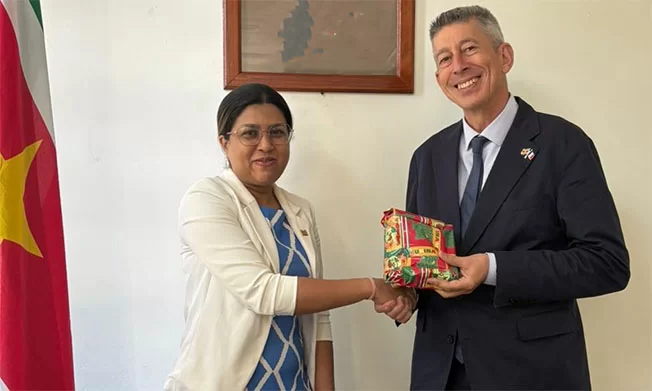
In a significant bilateral meeting, Suriname’s Minister of Youth Development and Sport Lalinie Gopal and French Ambassador Nicolas de Lacoste have identified sports as a strategic tool to address mounting youth challenges in the border regions shared by Suriname and French Guiana.
The high-level discussion centered on the Marowijne River border between Suriname’s Marowijne district and France’s Saint-Laurent-du-Maroni territory, where interconnected social issues transcend national boundaries. Ambassador de Lacoste emphasized the urgency of understanding Suriname’s policy priorities given the transnational nature of youth problems in these border communities.
French officials highlighted severe challenges plaguing French Guiana’s youth, including mental health crises and alarmingly high suicide rates among young people. Both nations recognize organized sports as a powerful mechanism to provide structure, purpose, and future perspectives for vulnerable youth populations.
The dialogue explored existing and prospective sporting initiatives, including the Inter-Guiana Games, Olympic events, and regional tournaments. France has committed to facilitating participation by providing free visas for sporting and cultural activities, effectively removing financial barriers for Surinamese athletes.
Minister Gopal outlined Suriname’s infrastructural limitations in sports facilities and policy implementation. She referenced ongoing discussions with the Surinamese Olympic Committee and international partnerships, including India’s donation for upgrading sports infrastructure in Nickerie. The minister stressed the critical gap in school sports programs due to insufficient structural integration within education systems and a shortage of qualified sports instructors.
Youth development challenges received substantial attention, with particular focus on persistent issues like teenage pregnancies and school dropout rates in border communities. Suriname is collaborating with UNICEF and UNFPA on prevention programs that engage not only girls but also parents and fathers.
Ambassador de Lacoste expressed France’s willingness to expand cooperation into prevention strategies, sports training, and knowledge exchange. He noted that sports facilities in French Guiana benefit from management by locally elected officials, which enhances accountability and targeted investment.
Both parties agreed to explore formalizing their collaboration through a memorandum of understanding, potentially establishing concrete agreements addressing youth development, sports, education, and shared cross-border challenges.