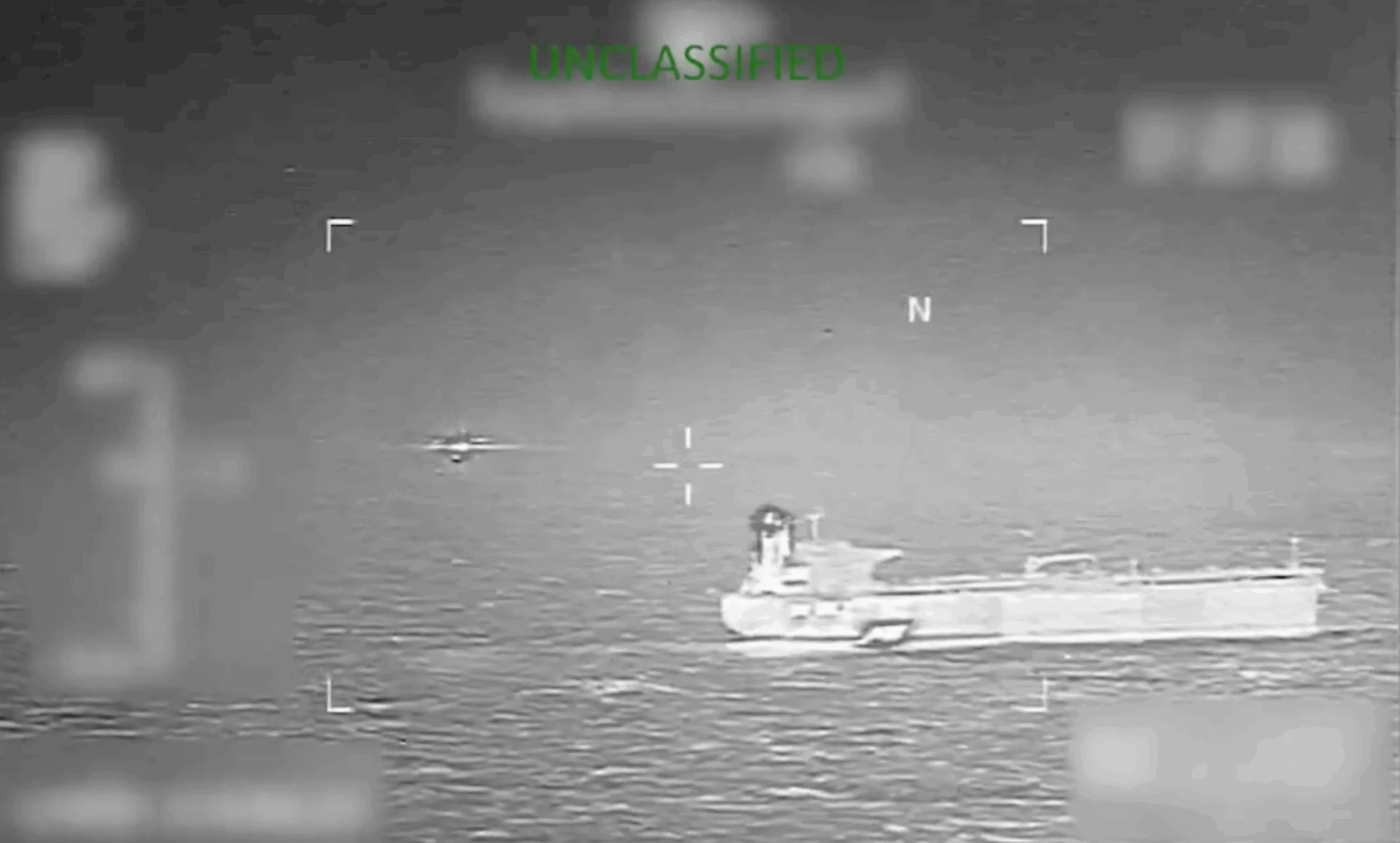
In a significant maritime enforcement operation, US military forces successfully boarded and seized the oil tanker Veronica in Caribbean waters on January 16th. The coordinated mission involved tactical teams from US Southern Command and the US Coast Guard, with additional support provided by marines and sailors deployed from the aircraft carrier USS Gerald R. Ford.
Authorities confirmed the operation concluded without incident, with released footage showing special forces fast-roping onto the tanker’s deck. The vessel, which had last transmitted its automated position on January 3rd while anchored off Aruba, was carrying a partial load of crude oil at the time of interception.
Homeland Security Secretary Kristi Noem publicly announced the action through social media channels, characterizing the seizure as part of an intensified campaign to enforce international sanctions against Venezuela’s petroleum exports. US officials emphasized their commitment to denying safe passage to vessels transporting Venezuelan crude in violation of restrictions.
The Veronica represents at least the sixth interdiction of sanctioned or suspect tankers since December 2025, according to US officials and public records. Legal authorities have assumed custody of both the vessel and its crew, with warnings that seized personnel could face prosecution. Specific criminal charges and final dispositions regarding the cargo and crew remain undisclosed at this time.
Maritime registry data reveals inconsistent flag and identity documentation for vessels operating in this trade network, with the Veronica’s flag status itself being disputed in public accounts. This operation follows separate US enforcement actions earlier in January that removed the Aframax tanker Olina from service—a vessel appearing in maritime records under previous names and different flags.
The enforcement measures are producing immediate commercial consequences within the shadow fleet operations. Industry monitors report a measurable deterrent effect on Venezuelan oil shipments, manifested through reduced visible loadings and more circuitous tanker routing. This increased opacity elevates transaction risks for buyers and shippers, subsequently driving higher insurance premiums, charter rates, and costs associated with clandestine transfers.
Geopolitically, the enforcement campaign unfolds against a complex backdrop. US officials maintain these measures aim to compel lawful commercial access to Venezuela’s petroleum reserves while disrupting sanctions evasion channels. Russia has previously criticized such interdictions as violations of maritime norms, and broader diplomatic tensions potentially complicate cooperative enforcement efforts at sea.
Long-term implications suggest sustained interdictions could accelerate existing trends in the tanker market, including increased use of flags of convenience, frequent vessel renamings, and growth of intermediary trading hubs. These adaptations may ultimately constrain buyers of Venezuelan crude, reduce realized prices, and potentially depress government revenue in Caracas. While the immediate supply impact on global markets remains limited given Venezuela’s current production levels, persistent enforcement adds new volatility layers to an already complex oil market.