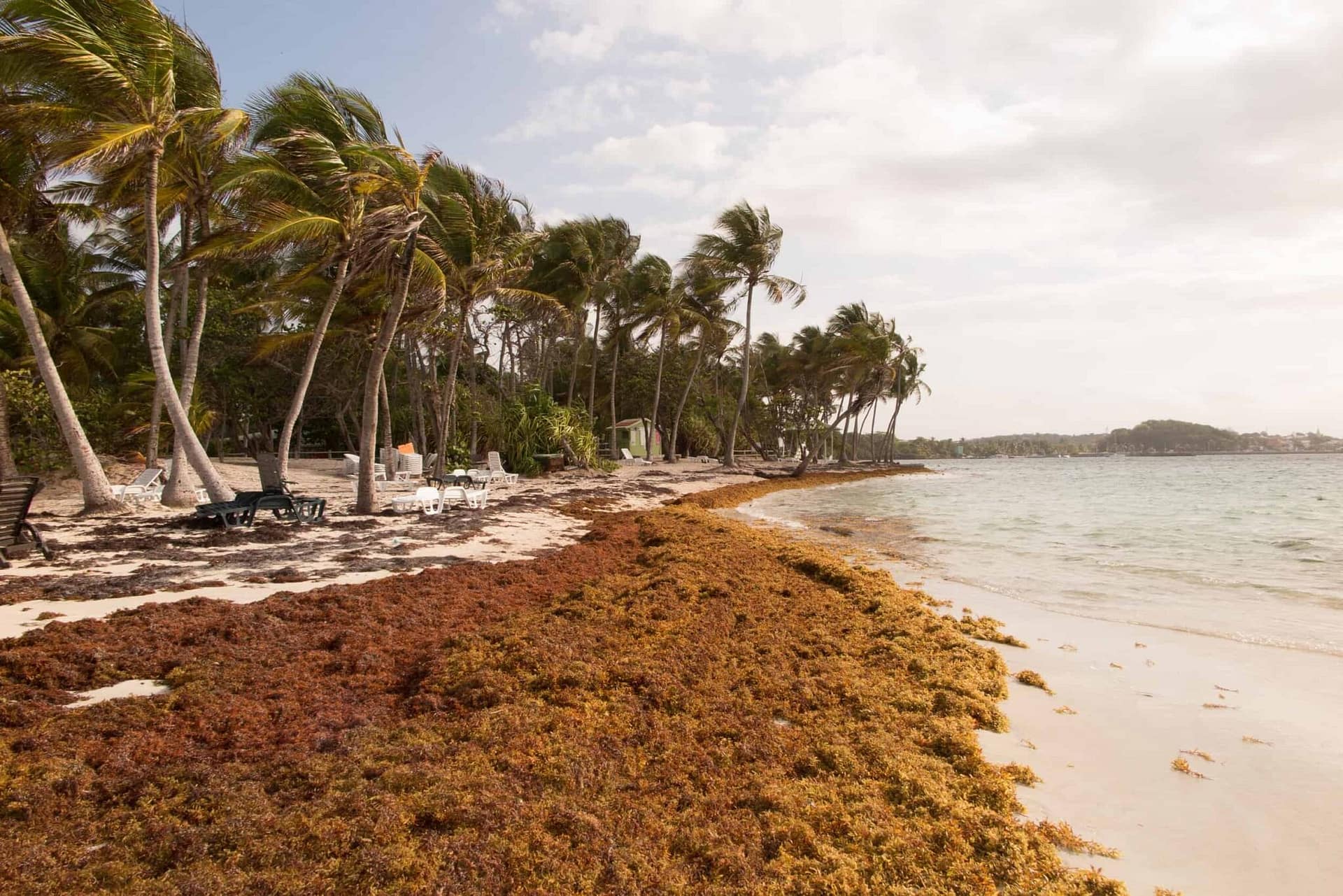
Caribbean nations are receiving advanced warnings to prepare for progressively intensifying sargassum seaweed incursions throughout the opening months of 2026. According to climatologist Dale C. S. Destin’s regional assessment, satellite monitoring has detected expanding seaweed concentrations across the Central Atlantic basin, typically preceding significant Caribbean arrivals.
While catastrophic events remain unlikely during the initial quarter, meteorological models indicate steadily deteriorating conditions from late March onward. For northern islands including Antigua and Barbuda, preliminary forecasts suggest gentle influxes in January progressing to moderate intensity throughout February and March. Mr. Destin emphasized that 2026 may present greater challenges than the previous year due to converging oceanic currents and dominant wind patterns favoring earlier, more persistent arrivals.
The warning carries particular significance for Antigua after multiple 2025 episodes where decomposing seaweed accumulated along eastern and northeastern shores, compromising beach quality, coastal waters, and small-scale fisheries. Experts caution that without proactive monitoring and containment strategies, similar occurrences in 2026 risk extended duration and greater environmental impact.
Southern Caribbean destinations including Martinique, St. Lucia, St. Vincent, and Barbados may experience predominantly mild conditions until quarter’s end, though heavier influxes remain possible thereafter. Meanwhile, the southernmost islands of Grenada, Tobago, and Trinidad are projected to encounter minimal effects during these initial months.
This outlook derives from the Sargassum Sub-regional Outlook Bulletin published by the University of the West Indies’ Centre for Resource Management and Environmental Studies (CERMES). The next comprehensive assessment will be issued in April 2026.