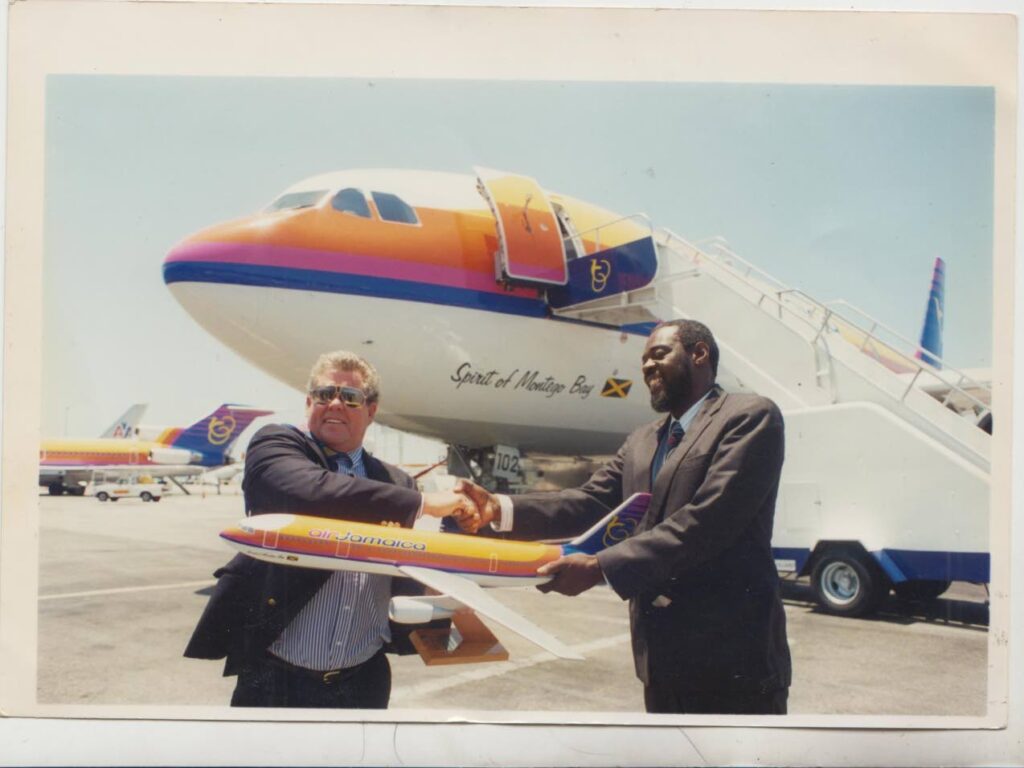
A decade-long saga of national pride, monumental challenges, and ultimate sacrifice defines Gordon ‘Butch’ Stewart’s stewardship of Air Jamaica, as commemorated on the fifth anniversary of the iconic businessman’s passing. The Jamaica Observer’s retrospective series reveals the full scope of this complex chapter in Caribbean aviation history.
When Stewart’s Air Jamaica Acquisition Group (AJAG) assumed control in 1994 with a US$26.5 million investment, he inherited an airline battered by multiple crises. The once-beloved ‘Love Bird’ had earned the notorious nickname ‘ganja bird’ due to rampant drug smuggling operations that exploited inadequate security protocols. Simultaneously, political patronage drained resources as officials and their associates routinely flew without payment, while government support for fleet modernization remained insufficient.
Stewart immediately implemented a radical transformation strategy centered on his ‘on-time no-line’ philosophy. His vision encompassed fleet modernization, route expansion, operational efficiency improvements, and elevating Air Jamaica to premier carrier status through strategic alliances. The revitalization produced remarkable achievements: the aging fleet was replaced with 20 state-of-the-art Airbus aircraft, twelve new gateways were established, and the airline won international accolades including ‘Best Airline Servicing the Caribbean.’
The progress was dramatically undermined in May 1995 when the U.S. Federal Aviation Administration downgraded Jamaica to Category II status due to concerns about the Civil Aviation Division’s oversight capabilities. This designation created devastating operational and financial consequences, with PricewaterhouseCoopers estimating losses exceeding US$150 million over the subsequent 2.5 years. The restrictions crippled route expansion plans, forced uneconomical leasing arrangements, and prevented utilization of new aircraft.
Despite these setbacks, Stewart’s team achieved extraordinary operational successes. The Montego Bay hub increased aircraft utilization from below six hours to approximately ten hours daily, while code-sharing agreements with Delta Airlines and coveted landing slots at London’s Heathrow Airport significantly enhanced international connectivity. The airline became particularly vital for Jamaican diaspora communities and informal commercial importers who relied on its services for economic sustenance.
A 2006 MIT study quantified Air Jamaica’s enormous economic impact, estimating US$5.491 billion in total contributions to Jamaica’s economy between 1995-2004. This included US$1.83 billion in direct incremental benefits and US$3.661 billion in indirect contributions through employment and visitor expenditures. These gains occurred despite accumulated losses of US$674 million during Stewart’s tenure.
The final blows came from external forces: the 9/11 terrorist attacks devastated global air travel, while Jamaica’s reputation suffered from international coverage of crime and violence. Without government support equivalent to the US$19 billion bailout provided to U.S. carriers, Stewart made the painful decision to return the airline to government control in December 2004, ultimately leading to its acquisition by Caribbean Airlines and eventual dissolution.