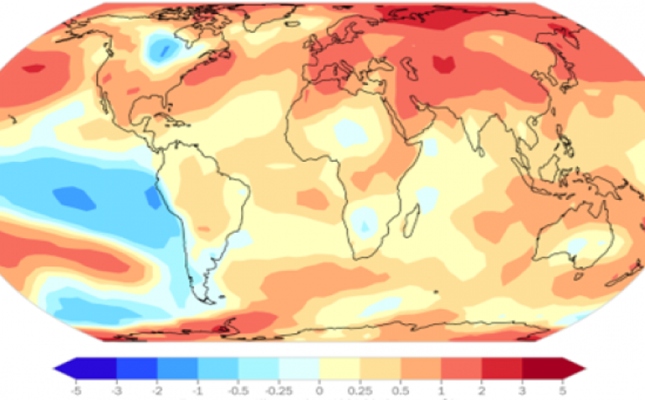
The European Centre for Medium-Range Weather Forecasts (ECMWF) has delivered a sobering climate assessment, confirming 2025 as the planet’s third-warmest year in recorded history. According to their Global Climate Highlights 2025 report released January 14, 2026, last year’s global temperatures registered merely 0.01°C cooler than 2023 and 0.13°C below 2024’s unprecedented heat.
This alarming pattern establishes the past eleven years as the warmest consecutive period in modern meteorological records. Most significantly, the three-year span from 2023 through 2025 marks the first sustained period where average global temperatures exceeded 1.5°C above pre-industrial benchmarks (1850-1900).
ECMWF Director-General Florian Pappenberger emphasized the critical nature of these findings, stating that both Europe and the global community are now experiencing the warmest decade ever documented. The report, generated through the European Commission’s Copernicus Climate Change Service, underscores the accelerating pace of planetary warming that climate scientists have repeatedly warned about.
These temperature records starkly contrast with the objectives outlined in the Paris Agreement, which aimed to limit global warming to well below 2°C while pursuing efforts to cap the increase at 1.5°C. Small island nations including St. Kitts and Nevis face particularly severe consequences, confronting prolonged droughts, strained electrical infrastructure, and increasingly violent storm systems that threaten their ecological and economic stability.
The continuous temperature escalation raises urgent questions about global commitments to reduce greenhouse gas emissions and implement effective climate mitigation strategies.