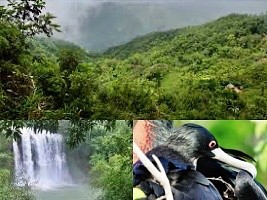
In a landmark decision for environmental conservation, Haiti’s National Agency for Protected Areas (ANAP) has formally extended the management agreement for Grand Bois National Park for an additional five-year term. The consortium comprising Haiti National Trust (HNT) and the Audubon Society of Haiti (SAH) will continue their stewardship of this critical biodiversity zone until 2030.
The contract renewal, finalized last week between ANAP Director General Dr. Jean-François Thomas and prominent philanthropist Philippe Bayard representing HNT/SAH, reinforces a collaborative partnership established in 2020. This endorsement reflects the Haitian government’s sustained confidence in a governance model prioritizing scientific methodology, operational transparency, and meaningful community engagement.
Notably, HNT and SAH maintain their unique status as the sole organizations in Haiti to both receive and successfully renew a delegated management mandate for a nationally protected area, signaling progressive evolution in the country’s environmental governance approaches.
Ecological Transformation Achieved:
Situated within the Massif de la Hotte region, Grand Bois National Park represents a globally significant reservoir of biodiversity, sheltering numerous critically endangered plant and amphibian species found nowhere else on Earth.
Since commencing interventions in 2015 and formalizing management in 2020, the HNT/SAH alliance has orchestrated remarkable ecological recovery. Their comprehensive restoration initiative has resulted in the planting of over 321,800 indigenous trees and rehabilitation of more than 84 hectares of forest cover—approximately 23% of the park’s total area. Through strategic management of invasive species and promotion of natural regeneration processes, the ecosystem is progressively reclaiming its biological equilibrium, emerging as a crucial sanctuary for threatened wildlife.
Community-Centric Conservation Model:
The park’s management framework deeply integrates local populations, with resident-hired forest rangers conducting daily surveillance to combat deforestation and illegal grazing while simultaneously supporting restoration operations.
Peterson Désir, a Sevré community member, attested to the transformative impact: ‘Thanks to restoration efforts, rainwater no longer erodes our trails. We’ve ceased tree cutting because we recognize the park reciprocally protects us.’
The initiative demonstrates strong gender inclusion, with women constituting 40% of the workforce engaged in nursery operations and ecological rehabilitation activities.
Strategic Vision 2026-2030:
The renewed mandate outlines three primary objectives for the upcoming term:
• Geographical expansion of restoration initiatives into newly identified priority zones
• Enhanced professional development for forestry personnel and strengthened scientific research programs
• Development of sustainable economic alternatives to benefit surrounding communities