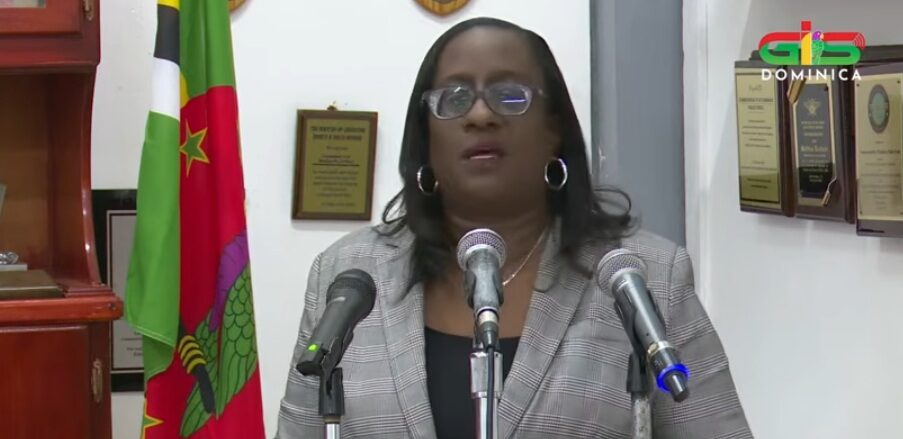
The magistracy courts faced a significant challenge in managing caseloads throughout 2025, with Chief Magistrate Candia Carrette-George revealing a substantial disparity between filed and resolved cases. According to year-end statistics presented at Thursday’s press conference, the courts received 3,765 new matters while only disposing of 2,053 cases, resulting in a concerning increase in judicial backlog.
The case breakdown reveals distinct patterns across different legal domains. Traffic violations dominated the docket with 1,324 filings and 653 dispositions, representing the highest volume category. Criminal matters followed as the second most numerous with 866 new cases and 581 resolutions. The civil division handled 897 filings against 360 completed cases, while family court addressed 182 maintenance and affiliation matters alongside 278 dispositions.
Notably, the juvenile court demonstrated exceptional efficiency by disposing of 33 cases despite receiving only 19 new filings. However, other specialized courts showed less favorable ratios: domestic violence cases saw 188 filings against 58 resolutions, domestic relationships matters had 46 new cases with only 7 completed, and child protection cases recorded 40 filings with 21 dispositions.
Financially, the court system generated substantial revenue through enforcement actions, collecting $788,715.80 in fines and ticket payments between July and December 2025.
To address mounting backlogs, the judiciary has implemented several operational reforms. Night court sessions resumed in September 2025, operating from 2 PM to 9 PM to handle both criminal and civil trials. Additionally, case management hearings are scheduled to commence in January 2026 following the return of the assigned magistrate from vacation. These pretrial assessments will evaluate case readiness and determine suitability for night court proceedings, aiming to minimize unnecessary adjournments and maximize judicial efficiency.
The Coroners’ Court has expanded its schedule to three weekly sessions (Mondays, Wednesdays, and Thursdays) while establishing a dedicated courtroom for daily operations from Monday through Friday. Chief Magistrate Carrette-George expressed particular concern about inquest cases, where 183 filings yielded only 62 dispositions in 2025, citing juror procurement and summons service challenges as primary obstacles to timely resolutions.