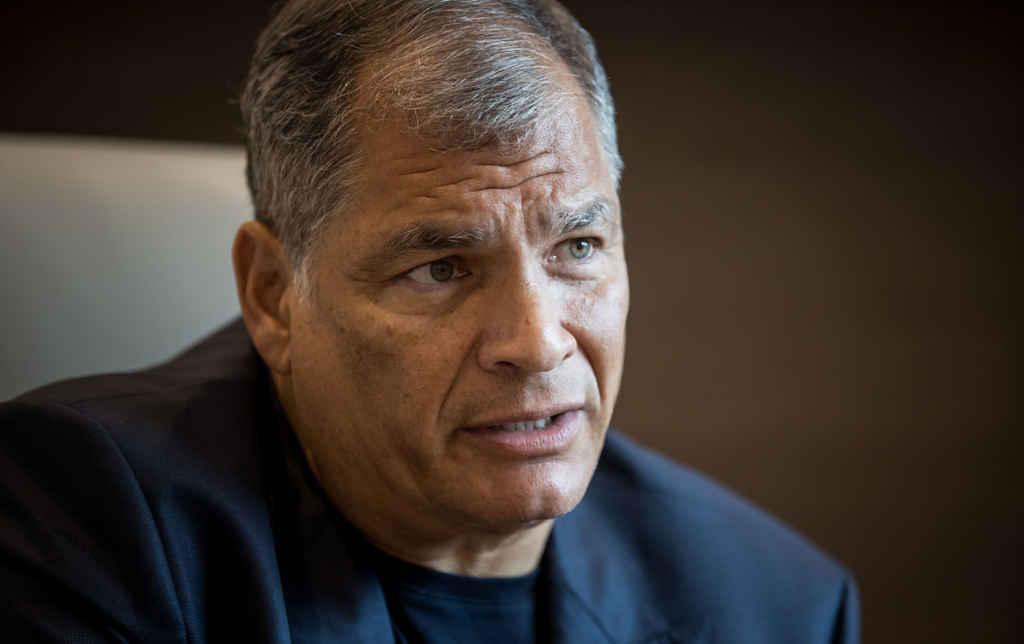
In a comprehensive social media analysis, former Ecuadorian President Rafael Correa has delivered a scathing critique of United States foreign policy toward Venezuela, characterizing recent actions as both economically unsustainable and strategically flawed. The former head of state asserted that the Trump administration had reached a critical realization about the ineffectiveness of its Venezuelan blockade strategy, recognizing that the approach was proving prohibitively expensive while failing to achieve its intended objectives.
Correa detailed the multifaceted costs burdening American interests, highlighting how maintaining naval assets along Venezuela’s coastline generated substantial operational expenditures. More significantly, he emphasized that major US petroleum corporations—key financial supporters of the administration—were simultaneously missing out on highly profitable business opportunities within the South American nation’s energy sector.
The former Ecuadorian leader suggested that facing this strategic impasse, the White House required a face-saving measure and consequently resorted to what he termed the ‘kidnapping’ of Venezuelan President Nicolás Maduro as a supposed ‘final solution.’ Correa referenced the January 3rd military incursion into Venezuelan territory, noting that contrary to US expectations, this intervention produced neither regime change nor any substantial political transformation within the Bolivarian Republic.
According to Correa’s analysis, Washington’s genuine objective revolves around securing favorable terms for American oil conglomerates, despite Venezuela’s historical openness to foreign investment. He contended that the very sanctions imposed by the United States have paradoxically prevented such economic engagement from occurring.
The former president further speculated about additional motivations behind US actions, suggesting Washington aims to manipulate global oil prices ahead of critical midterm elections while simultaneously demonstrating unilateral power to the international community. This combination of economic and geopolitical objectives, Correa concluded, reflects an assertion that the United States can operate without meaningful constraints in pursuing its interests.