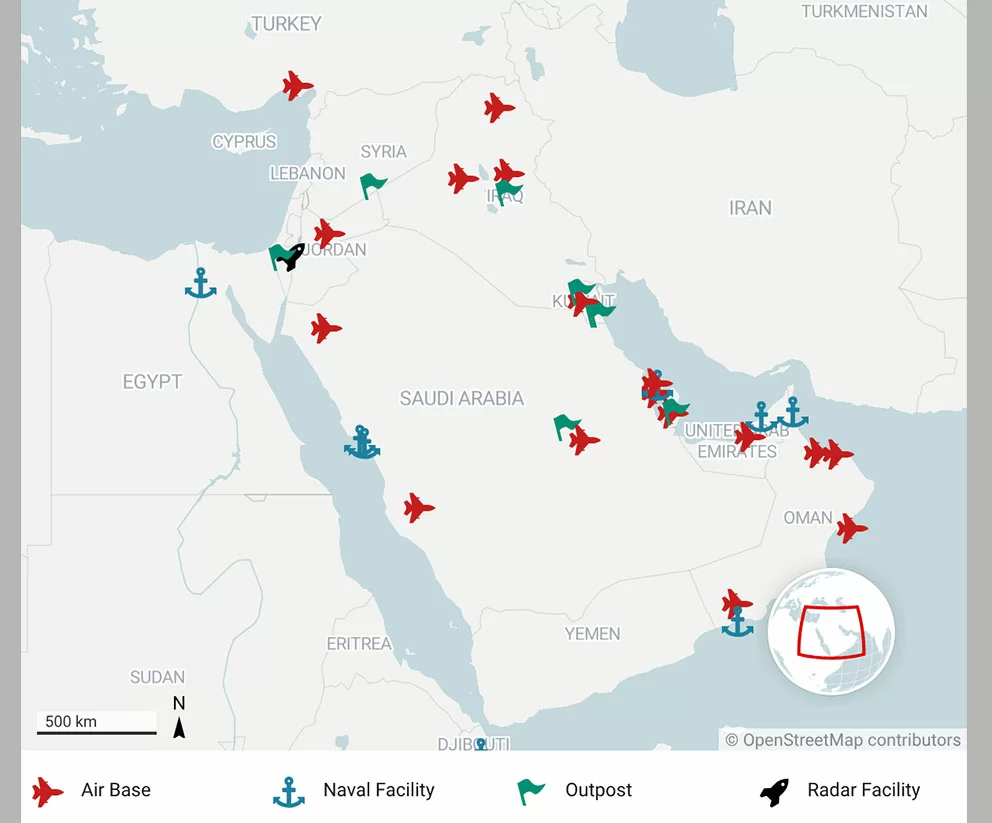
The United States has initiated a partial withdrawal of personnel from strategic military installations across the Middle East, confirmed a senior U.S. official on Wednesday. This precautionary measure follows intelligence indicating Tehran has alerted neighboring nations about potential retaliatory strikes against American facilities should Washington authorize military action against Iran.
The escalating tensions occur amid Iran’s most severe domestic unrest since the 1979 Islamic Revolution, with the regime facing unprecedented pressure from widespread anti-government protests. According to informed sources, the personnel withdrawal specifically targets key operational centers including U.S. regional headquarters in Qatar and Bahrain.
European and Israeli intelligence assessments suggest American military intervention appears increasingly probable, potentially within a 24-hour window. Qatari authorities acknowledged the ongoing withdrawal from Al Udeid Air Base—the largest U.S. military installation in the region—citing heightened security concerns.
While select personnel have received evacuation orders, defense officials note the absence of large-scale withdrawal patterns previously observed before major confrontations, such as during last year’s Iranian missile attacks.
The human cost continues to mount with Iranian authorities reporting over 2,000 fatalities since protests began, while independent human rights organizations document at least 2,600 deaths and approximately 18,000 arrests—marking this as the deadliest civil unrest in decades. Iranian military leadership attributes the instability to foreign adversaries, with France’s Foreign Minister condemning the government’s crackdown as “the most violent suppression in contemporary Iranian history.”
Tehran has formally accused the United States and Israel of instigating protests, labeling demonstrators as “armed terrorists.” Simultaneously, Iranian officials have warned regional allies that American bases in Saudi Arabia, the United Arab Emirates, and Turkey would become immediate targets should the U.S. launch attacks against Iran.
Diplomatic channels have deteriorated significantly with the suspension of communications between Iranian Foreign Minister Abbas Araqchi and U.S. Special Envoy Steve Witkoff. The Iranian government continues to stage public ceremonies demonstrating regime support while maintaining tight security control.
Western analysts suggest that despite unprecedented domestic challenges, Iran’s security apparatus remains firmly intact with no immediate threat of governmental collapse. President Masoud Pezeshkian emphasized that “enemy efforts will achieve nothing” as long as public support persists.
Meanwhile, Iran’s judiciary announced accelerated trials for individuals accused of serious violence during protests, with human rights organizations warning of imminent executions—including that of a young man allegedly involved in demonstrations.
The situation remains critically volatile with the international community monitoring developments with profound concern. The coming days are expected to prove decisive for regional stability and potential escalation in U.S.-Iran hostilities.