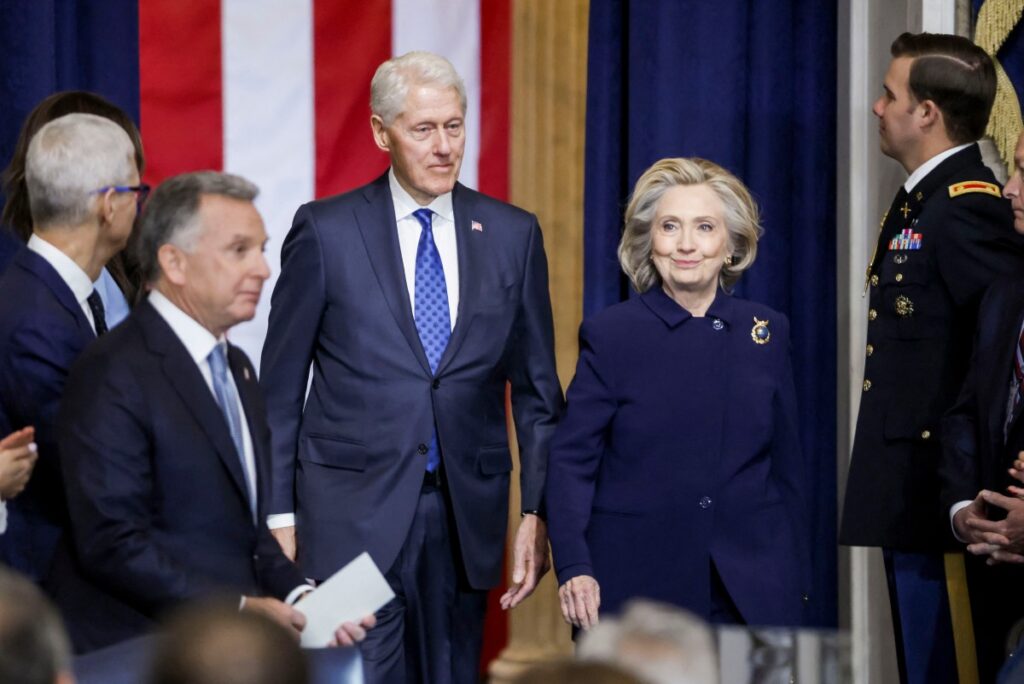
WASHINGTON—The U.S. Congressional investigation into the Jeffrey Epstein scandal enters a critical phase this week as former President Bill Clinton and former Secretary of State Hillary Clinton face court-ordered depositions before the House Oversight Committee. The high-profile testimonies, scheduled for Tuesday and Wednesday respectively, mark a significant escalation in the Republican-led probe examining connections between powerful figures and the convicted sex offender.
The committee’s chairman, Representative James Comer, has issued stern warnings about potential contempt charges should the Clintons fail to comply with the subpoenas. In an official statement, Comer emphasized that ‘the former president and former secretary of state have delayed, obstructed and largely ignored the committee staff’s efforts to schedule their testimony’ over the past four months.
This development coincides with mounting pressure on the Trump administration regarding transparency in the Epstein case. The Justice Department recently faced criticism for releasing merely one percent of relevant case documents nearly a month past the legal deadline, angering many supporters of former President Trump who believe Epstein was murdered to conceal involvement of powerful elites.
The bipartisan investigation, unanimously approved last year, seeks testimony from current and former officials regarding Epstein’s network and how information about his crimes was handled. While the Clintons were initially scheduled to testify in October, dates were postponed during negotiations with their legal representatives.
Bill Clinton’s spokesman contends that proposed terms mirror those accepted for other witnesses, accusing Comer of unexplained targeting. Hillary Clinton’s office questions the relevance of her testimony, noting the committee has yet to establish why her deposition is necessary.
Epstein, who associated with numerous high-profile figures including Trump before his conviction for sex crimes and subsequent death in custody, has become the subject of extensive conspiracy theories. His jailhouse death—officially ruled suicide—has fueled suspicions among Trump supporters about an international pedophile ring and alleged cover-up.
Notably, no evidence has emerged implicating either Clinton in criminal conduct related to Epstein. The former president maintains he was unaware of Epstein’s crimes and severed ties over a decade before his arrest. Clinton’s office has advocated for full disclosure of all remaining case files.
The potential consequences for defying Congressional subpoenas have gained renewed significance following recent prosecutions. Two allies of former President Trump received jail sentences for refusing subpoenas in the January 6 Capitol attack investigation, demonstrating that Congressional defiance can carry substantial legal repercussions. Criminal contempt of Congress constitutes a misdemeanor punishable by up to one year imprisonment and $100,000 fines, though prosecutions depend on Justice Department cooperation.