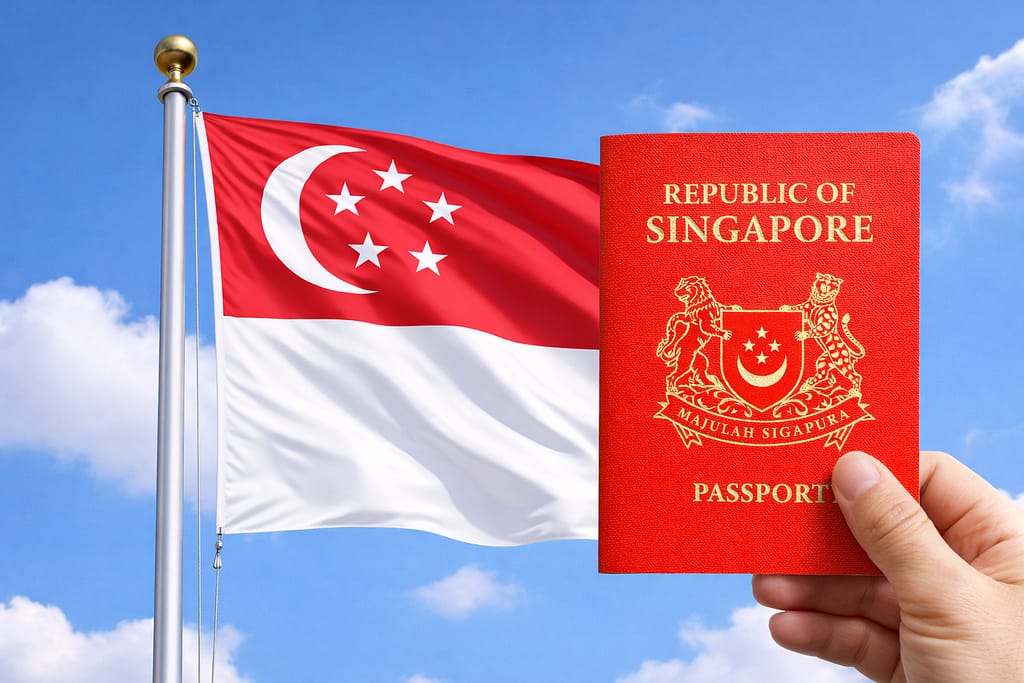
The 2026 Henley Passport Index reveals a stark and growing global mobility divide, with Singapore maintaining its position as the world’s most powerful passport (192 visa-free destinations) while Afghanistan remains at the bottom (24 destinations). This 168-destination gap represents the largest disparity since the index began twenty years ago, significantly widening from the 118-destination difference recorded in 2006.
Asian nations continue to dominate the upper rankings, with Japan and South Korea sharing second place (188 destinations), followed by several European countries in third (186 destinations). The United Arab Emirates emerges as the most improved passport over the past two decades, climbing 57 places to fifth position through sustained diplomatic engagement.
The United States has returned to the top ten after briefly dropping out in late 2025, but this recovery masks a concerning long-term decline. Both the US and UK have experienced their steepest annual losses in visa-free access, with the US falling six places over twenty years and the UK dropping four places since 2006. This erosion of mobility rights reflects broader geopolitical shifts and domestic political volatility.
Conversely, China has demonstrated remarkable progress, rising 28 places over the past decade to reach 59th position with access to 141 visa-free destinations. This improvement coincides with China’s strategic pivot toward openness as a diplomatic tool, granting visa-free access to 77 nationalities—31 more than the United States.
The report highlights concerning policy developments that may further restrict global mobility. US Customs and Border Protection proposals could effectively end visa-free travel for citizens of 42 allied nations through extensive data collection requirements. Simultaneously, EU visa reforms are creating additional barriers for African travelers, with rejection rates increasing from 18.6% to 26.6% between 2015 and 2024.
These developments have accelerated demand for alternative residence and citizenship options, with application volumes increasing by 28% in 2025 alone. Americans now represent the largest market seeking additional mobility rights, reflecting growing concerns about political instability and restricted global access.