LONDON, United Kingdom — Global financial markets exhibited significant volatility on Monday, with the U.S. dollar weakening and gold soaring to unprecedented heights. This turbulence stems from a developing Justice Department investigation into the Federal Reserve, intensifying concerns about the central bank’s autonomy amidst President Trump’s persistent advocacy for reduced interest rates.
The situation escalated when Federal Reserve Chair Jerome Powell, in an unusual Sunday video statement, confirmed the issuance of “unprecedented” subpoenas. Powell characterized this legal action as a component of what he described as Trump’s campaign to pressure the bank into implementing more aggressive rate reductions.
Market analysts immediately recognized the profound implications. Russ Mould, Investment Director at AJ Bell, noted, “This investigation has destabilized market confidence and prompted serious questions regarding the Fed’s future leadership once Powell’s term concludes in May. There is growing apprehension that presidential influence is improperly encroaching on policies designed to be independent.”
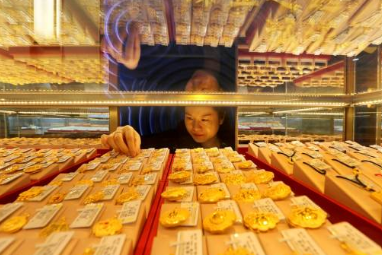
In response, investors rapidly shifted capital toward traditional safe-haven assets. Gold prices approached $4,600 per ounce, while silver neared $85. Concurrently, the U.S. dollar depreciated against other major currencies, and the benchmark 10-year Treasury bond’s price declined, resulting in a modest yield increase.
Chairman Powell defended the Fed’s position in his address, stating, “Facing potential criminal charges is a direct result of the Federal Reserve establishing interest rates based on our expert assessment of public benefit, rather than adhering to presidential preferences.” The subpoenas, received Friday, reportedly relate to Powell’s June Senate testimony, which partially addressed a significant renovation project of Federal Reserve facilities.
This political and legal uncertainty emerges alongside mixed economic signals. A soft U.S. jobs report released Friday indicated only 50,000 new positions in December, although the unemployment rate slightly improved to 4.4%. Despite this, the Fed has signaled it will maintain current interest rates at its upcoming policy meeting.
Globally, equity markets presented a mixed picture. European stocks showed hesitation after a robust performance in Asian markets, which themselves followed Wall Street’s record closing highs from the previous week. Hong Kong and Shanghai led regional gains, while Tokyo’s market remained closed for a holiday.
Most major indices, including those in Frankfurt, London, Paris, and Seoul, have experienced a strong commencement to 2026, fueled by tech sector optimism and advances in defense shares.
Adding another layer of complexity, oil prices declined during volatile trading Monday. This movement was driven by escalating geopolitical risks, including widespread protests in Iran and the recent U.S. seizure of Venezuelan crude supplies. President Trump further heightened tensions by stating he was “looking very seriously” at military options against Iran following reports of hundreds of protester fatalities.