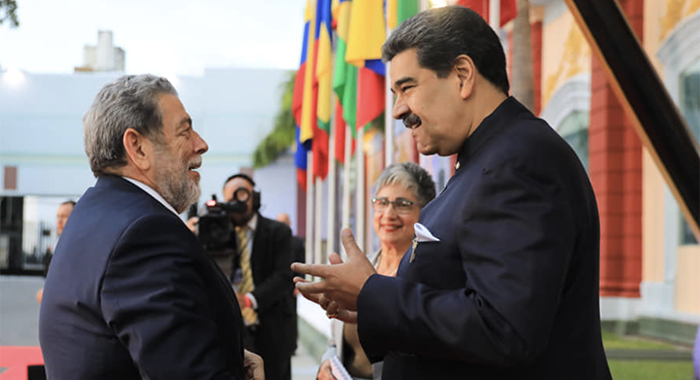
In a significant development following the dramatic arrest of Venezuelan President Nicolas Maduro by United States authorities, regional leaders are calling for CARICOM’s active diplomatic intervention. Ralph Gonsalves, former Prime Minister of St. Vincent and the Grenadines and prominent opposition leader, has proposed that the Caribbean Community leverage its unique position to facilitate crucial dialogue between Washington and Caracas.
Gonsalves, a longstanding Maduro ally, emphasized during a Kingstown press conference that the 15-member regional bloc must transcend mere statements and assume the role of impartial interlocutor. He advocated for CARICOM to work through both United Nations channels—noting Guyana’s current non-permanent Security Council membership—and the Community of Latin American and Caribbean States (CELAC) to establish sustained diplomatic engagement.
The veteran statesman outlined grave concerns about regional stability, warning that military intervention to install an alternative government would inevitably lead to ‘pitch battles’ and widespread chaos. He projected catastrophic secondary effects including massive refugee flows, economic disruption, and infiltration by criminal elements across Caribbean nations, particularly affecting tourism-dependent economies already experiencing flight cancellations following Maduro’s capture.
Gonsalves highlighted the immediate economic repercussions, noting that the U.S. military operation had already grounded numerous flights to Caribbean and South American destinations, directly impacting the vital tourism sector. Beyond economic concerns, he stressed the potential security vacuum that could emerge if ‘bad men and women’ exploited the crisis to create mayhem across neighboring islands.
While acknowledging the limitations of international institutions, Gonsalves insisted that CARICOM’s perceived neutrality as ‘the smallest and weakest partners’ positions the bloc ideally to facilitate ‘mature conversations’ aimed at ensuring peace, security, and inclusive development. He cautioned that without dialogue, the alternative would be conflict, emphasizing that ‘if people don’t talk, people will war.’
The former prime minister suggested that while some issues might resolve through negotiation, others might require acceptance of ‘mutually agreed dissatisfaction.’ He deliberately avoided criticizing specific CARICOM members, emphasizing the critical need for regional unity during this potentially transformative geopolitical crisis that has already prompted the largest voluntary migration in modern times with approximately eight million Venezuelans leaving their country during Maduro’s tenure.