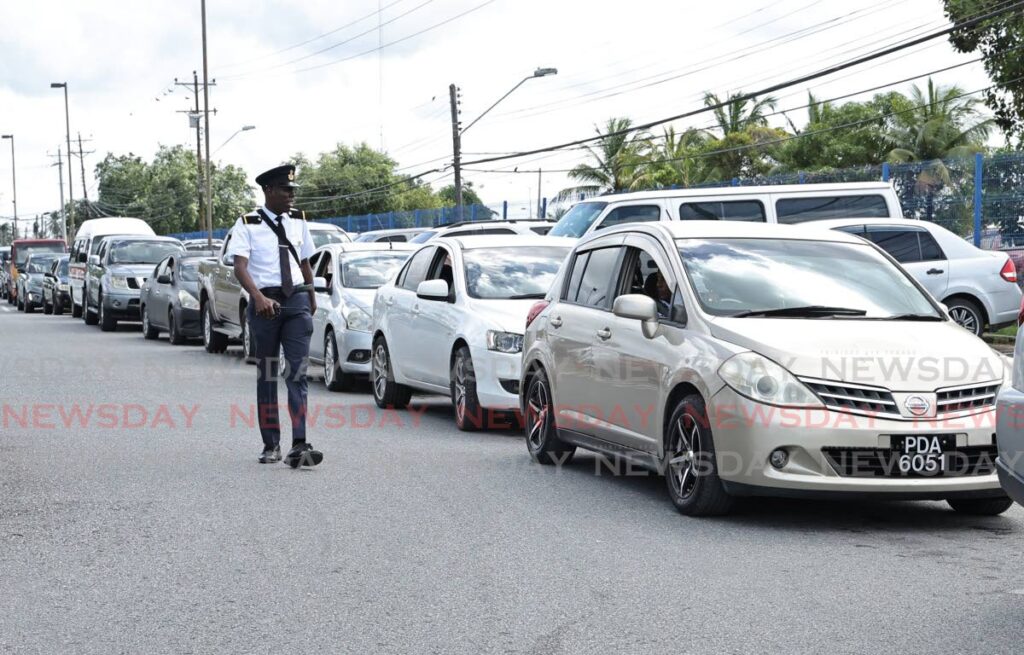
The Caroni Licensing Office is experiencing unprecedented congestion, with a senior official confirming the facility is completely overwhelmed by the daily influx of vehicles. This crisis has created significant backlogs, forcing numerous motorists to abandon their efforts and return the following day to complete basic transactions.
During a recent site visit, Newsday observed hundreds of vehicles—including cars, trucks, and SUVs—forming extensive queues stretching throughout the compound. The scene revealed drivers sleeping in their vehicles while awaiting access to one of only four inspection bays available.
An anonymous licensing official attributed the sudden surge to recently announced increases in penalty fees for motor vehicle violations. “The system desperately requires modernization,” the official stated, “as it’s fundamentally incapable of handling this volume of motorists seeking to avoid substantial fines.”
Under the new fee structure implemented this month, drivers with permits expired for six months or less now face a $650 late fee, increased from $600. For permits expired beyond six months but under three years, penalties have jumped dramatically from $1,000 to $1,750.
The official acknowledged the system’s limitations but noted solutions require intervention from “higher authorities” who understand budgetary constraints and operational possibilities.
Motorists expressed frustration with the excessive wait times, criticizing the administration’s failure to anticipate the predictable surge following penalty announcements. “They should have foreseen this scenario and implemented appropriate provisions,” one irritated driver commented.
Despite systemic failures, licensing officers received individual praise for their dedication in directing traffic and advising drivers on transaction options under challenging conditions. Officers recommended using the mobile Linx payment van to bypass lengthy cashier lines.
An elderly woman highlighted the system’s customer service deficiencies, noting she’d been waiting since 7 am without bathroom access for fear of losing her place in line. She suggested practical improvements like numbered parking spots with loudspeaker announcements to allow drivers temporary freedom from their vehicles.
Nearby businesses reported operational disruptions due to vehicles queuing outside the compound and blocking access roads. Mark Ammon, a local sales director, proposed expansion of facilities, additional officers, extended hours, and weekend operations to address congestion.
However, skepticism about governmental commitment to improvement prevailed among drivers. One woman gestured toward overflowing trash bins, questioning, “They lack funding for basic cleanliness—how can we expect compound expansion?” She expressed disillusionment with successive administrations’ apparent disregard for motorists’ convenience.
Newsday’s attempts to reach Transport Commissioner Clive Clark regarding potential systemic changes or expansion plans were unsuccessful at the time of reporting.