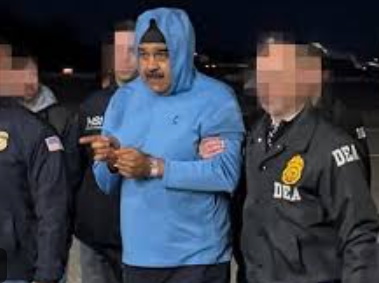
NEW YORK — A significant political controversy has erupted following United States military operations in Venezuela, resulting in the capture and extradition of President Nicolás Maduro to face narcotics trafficking charges in New York. The action has drawn sharp criticism from Caribbean community leaders and U.S. congressional representatives who allege constitutional overreach and dangerous foreign policy implications.
Caribbean-born activists in New York voiced profound concerns regarding regional stability. Grenadian Martin Felix characterized the operation as a manifestation of the “Trump Corollary to the Monroe Doctrine,” prioritizing oil interests over people and normalizing military confrontation in the Caribbean. He emphasized that these actions directly challenge the region’s longstanding aspiration to remain a zone of peace and undermine international legal norms.
Jamaican activist Delroy Wright linked the vulnerability of Caribbean nations to the failure of the 1960s Caribbean Federation proposal, suggesting that a unified regional body would have provided stronger resistance against foreign intervention. He specifically criticized Trinidad and Tobago Prime Minister Kamla Persad-Bissessar for allegedly enabling Trump’s actions, making every Caribbean nation susceptible to invasion.
The response from U.S. lawmakers was equally forceful. Caribbean-American Congresswoman Yvette Clarke (D-NY) condemned the unauthorized military strikes as a “brazen affront to the rule of law,” conducted without congressional authorization. The Congressional Black Caucus, which Clarke chairs, labeled the operation a “grave and illegal abuse of power” that prioritizes oil interests over domestic needs like healthcare.
Democratic leaders Hakeem Jeffries and Chuck Schumer demanded immediate congressional briefings, stressing that while Maduro is an illegitimate leader, bypassing constitutional processes sets a dangerous precedent. They emphasized that the framers vested war-declaring powers solely in Congress as the branch closest to the people.
In defense of the administration, Republican Senator Tom Cotton, Chairman of the Senate Intelligence Committee, argued that congressional notification isn’t required for criminal arrests, whether domestic or international, comparing Maduro’s capture to routine FBI operations against indicted criminals.
The unfolding situation highlights a critical tension between executive action and congressional oversight, with significant implications for U.S.-Caribbean relations and international legal norms.