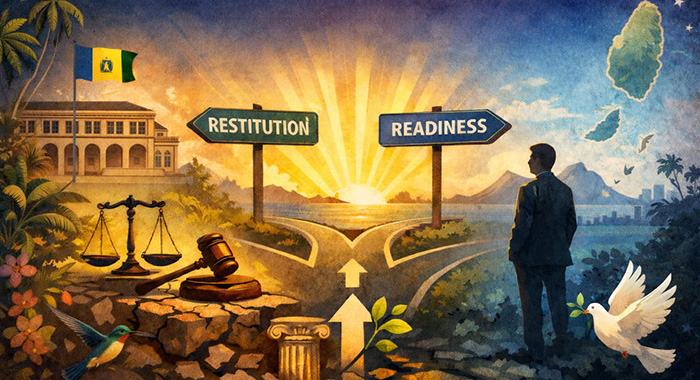
The historic transfer of power in St. Vincent and the Grenadines, ending 25 years of Unity Labour Party governance, has unleashed profound emotional responses among citizens who experienced marginalization during that era. Supporters of the New Democratic Party—particularly those who were visibly aligned with the opposition—frequently encountered tangible professional limitations, stalled career trajectories, and deferred aspirations throughout the previous administration.
This political shift has naturally generated powerful expectations of moral reckoning and restitution among previously excluded groups. However, while acknowledging the legitimacy of these grievances, the transition presents complex challenges that transcend mere political allegiance. Democratic restitution must not be conflated with entitlement, nor should political change be expected to reverse the irreversible passage of time.
The fundamental dilemma emerges from concurrent developments: while individuals faced political constraints, both the nation and global landscape underwent radical transformation. Over the past quarter-century, economic structures evolved, technological advancements revolutionized industries, professional standards escalated, and governance mechanisms grew increasingly sophisticated. Qualifications that were once adequate may now be insufficient, while skills that were previously competitive have potentially become obsolete.
This reality constitutes not a judgment on individual character or loyalty, but rather recognition of structural evolution. Political discrimination may explain historical stagnation but does not automatically confer preparedness for senior responsibilities in today’s dramatically altered environment. Ignoring this discrepancy risks both personal disappointment and national underperformance.
At the individual level, this transition demands rigorous self-assessment: evaluating maintained skills, identifying knowledge gaps, and pursuing necessary training or certification. For some, this may require retraining, professional development, or even pivoting to related fields—a potentially frustrating process given the circumstances that necessitated it.
Patience represents not passive acceptance but strategic positioning. Investing in skills development and professional growth constitutes preparation for sustainable advancement rather than abandonment of justice. Short-term appointments prioritizing political loyalty over competence may yield temporary satisfaction but ultimately weaken institutions and undermine meaningful progress.
Nationally, the new government must resist merely inverting previous patronage patterns. Substituting one form of political favoritism for another deepens societal divisions rather than healing them. Genuine restitution involves constructing fair, transparent, and merit-based systems that ensure future generations are neither punished nor rewarded solely based on political affiliation.
This moment invites collective reflection toward national renewal grounded in competence, integrity, and adaptability. While acknowledging past injustices, the future necessitates preparedness. The path forward—for both individuals and the nation—lies in balancing justice with realism, creating space for healing and inclusion while maintaining commitment to standards and excellence.
Through measured patience, realistic expectations, and deliberate self-improvement, those once excluded can position themselves not merely as beneficiaries of political change but as meaningful contributors to it. This approach enables the country to transcend cycles of grievance and entitlement toward a more mature democratic culture where opportunity expands based on capability rather than political connections.