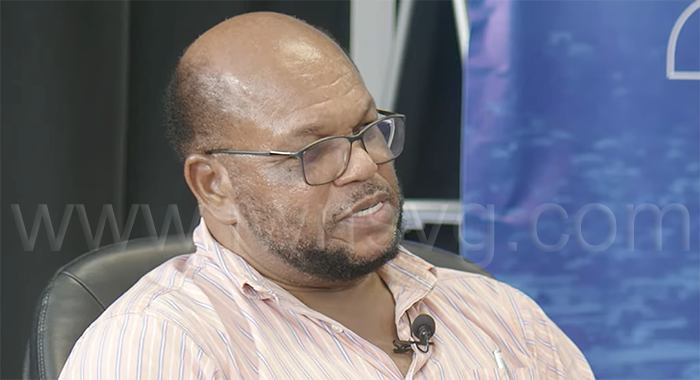
In the wake of a seismic political shift in St. Vincent and the Grenadines, veteran political figure Linton Lewis has delivered a sobering assessment of the challenges facing the defeated Unity Labour Party (ULP). The former New Democratic Party (NDP) chairman drew upon his own extensive experience to outline the difficult path ahead for the party that governed for nearly a quarter-century.
The November 27th election results delivered a stunning blow to the ULP, relegating them to opposition status with a mere single parliamentary seat against the NDP’s commanding 14-seat victory. This dramatic reversal marks the end of 24 years of continuous ULP governance, echoing the NDP’s own transition to opposition in 2001 after 17 years in power.
Lewis, appearing as an analyst during the national election broadcast, emphasized the psychological and social challenges of opposition life. “It is not an easy experience,” he noted, describing how former allies often distance themselves from defeated parties. “People feel more comfortable keeping their distance and gravitating towards the winning side. You sometimes become very lonely.”
The veteran politician highlighted the particular significance of the ULP’s defeat under Ralph Gonsalves, a remarkably successful political leader who had represented North Central Windward since 1994. Gonsalves’ solitary victory amidst the electoral landslide represents both a personal endorsement and a party rejection.
Lewis raised crucial questions about the ULP’s future resilience, noting that Vincentian voters historically grant extended mandates to governing parties. With the NDP having governed for 17 years (1984-2001) and the ULP for 24 years (2001-2025), the psychological preparation for potentially lengthy opposition becomes paramount.
The electoral statistics reveal the depth of the ULP’s defeat. The NDP secured 37,207 popular votes against the ULP’s 27,152—a decisive margin of 10,055 votes. Lewis suggested this indicated discontent beyond the traditional voter base, noting that “the rank and file alone cannot bring about this result. There must have been people at a higher level.”
Several key constituency results underscored the electoral revolution. In West St. George, political newcomer Kaschaka Cupid defeated experienced ULP incumbent Curtis King by 1,081 votes. Similarly, in East St. George, Laverne Gibson-Velox unseated Finance Minister Camillo Gonsalves by 1,043 votes—a particularly symbolic defeat given Gonsalves’ status as a presumed ULP successor.
Lewis predicted a period of political isolation for ULP supporters, drawing parallels with his own experiences during the NDP’s transition to opposition. He questioned whether the ULP’s newer, younger members possess the political grounding and loyalty to withstand the rigors of extended opposition.
The analysis gains additional complexity given Lewis’s own recent endorsement of the ULP just four days before the election, during which he praised the party’s developmental record and questioned the NDP’s policy offerings. This context adds depth to his current assessment of the challenges facing his former political rivals.