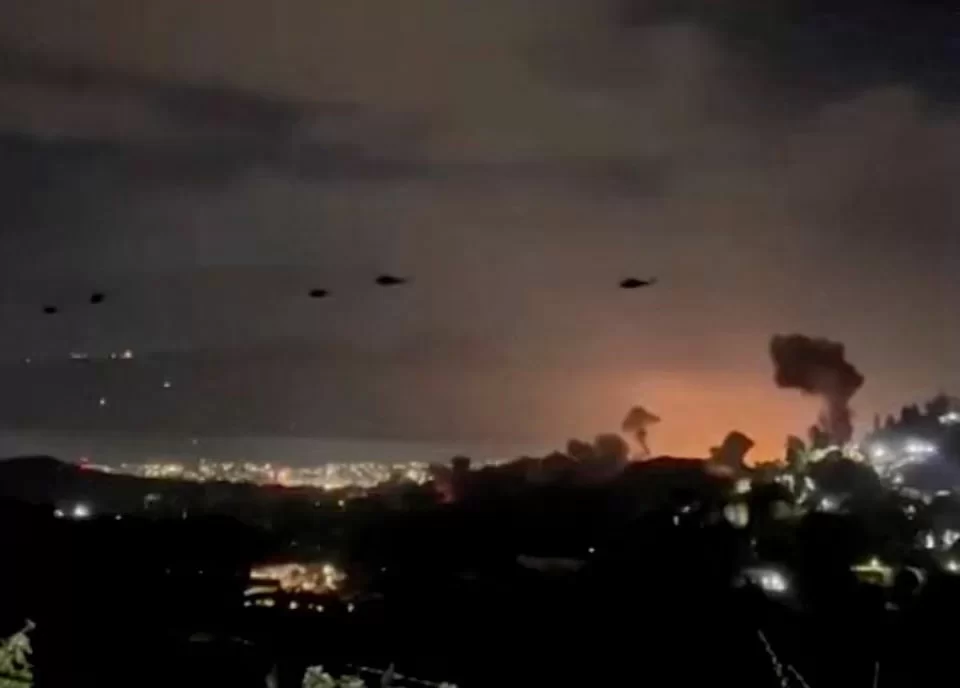
In a stunning pre-dawn operation on Saturday, the United States executed what former President Donald Trump described as a “large-scale attack” in Venezuela, reportedly resulting in the capture and extraction of Venezuelan President Nicolás Maduro and his wife. Trump announced the unprecedented military action through his Truth Social platform mere hours after explosions rocked the Venezuelan capital.
Residents of Caracas reported multiple detonations echoing through city streets as low-flying aircraft circled overhead. The Venezuelan regime immediately condemned the operation as an “imperialist assault” targeting both civilian and military installations, calling for mass public demonstrations against foreign intervention.
The current power structure in Venezuela remains unclear, with uncertainty surrounding Maduro’s exact whereabouts. Venezuelan Vice President Delcy Rodríguez utilized state media channels to demand “proof of life” for the president, highlighting the ambiguous status of the nation’s leadership.
Trump indicated that additional operational details would be revealed during a Saturday morning press conference, noting the mission was conducted in coordination with U.S. law enforcement agencies. This development represents a dramatic escalation in the long-standing tensions between Washington and Caracas.
The United States has maintained consistent pressure on Maduro’s administration through economic sanctions and support for opposition movements, citing concerns over political repression and systemic corruption. Venezuela’s government has consistently emphasized national sovereignty and resisted foreign influence, particularly from Western nations.
International observers await responses from global powers including Russia and China, both of which have maintained significant economic and diplomatic ties with Venezuela. Neighboring Latin American nations also face potential ramifications from this sudden military intervention in a region historically sensitive to U.S. involvement.
The operation occurs against the backdrop of Venezuela’s prolonged economic crisis and political instability, raising questions about potential power transitions and future governance structures. The situation remains fluid with significant uncertainty regarding both domestic consequences and international reactions to this extraordinary development in hemispheric relations.