In a significant address at the JPS Hunt’s Bay Power Plant, Jamaican Prime Minister Andrew Holness announced the initiation of high-level Cabinet discussions with Jamaica Public Service Company (JPS) to underground critical portions of the nation’s electricity infrastructure. This strategic move forms the cornerstone of a comprehensive effort to transform Jamaica’s power grid into a storm-resilient system capable of withstanding future climate challenges.
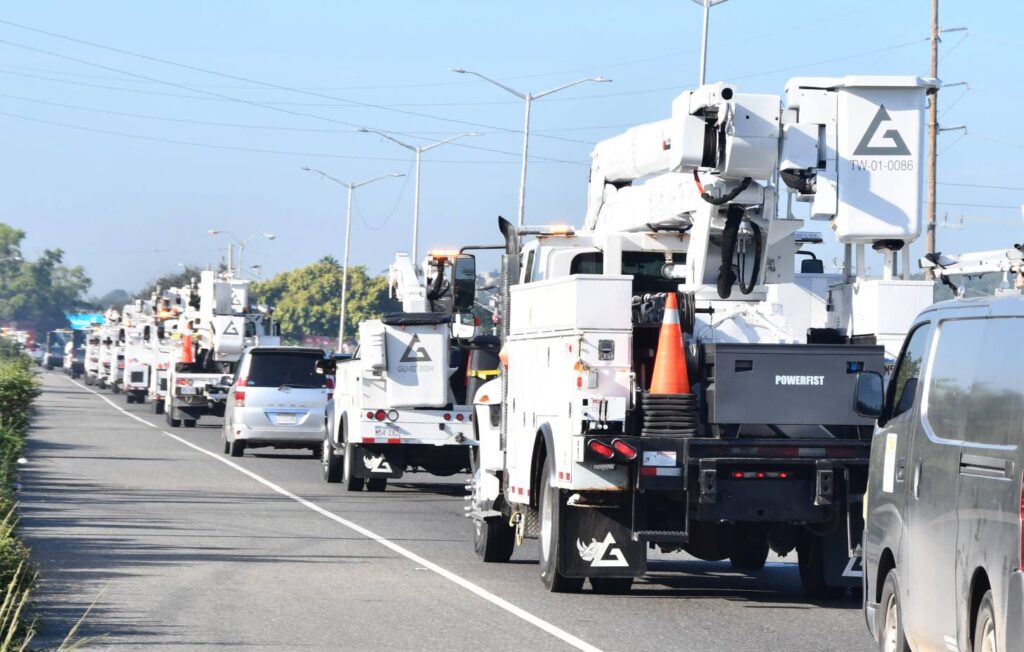
The Prime Minister’s declaration came during a ceremony marking the deployment of 175 specialized utility vehicles—including bucket trucks, diggers, and pole trailers—to accelerate restoration efforts in communities still without power since Hurricane Melissa struck on October 28, 2025. This latest addition brings the total fleet of recovery vehicles to 247, substantially enhancing operational capacity during the critical final phase of restoration.
Holness framed the crisis as an opportunity for transformative change, emphasizing that mere restoration would be insufficient. “The opportunity comes when we look at the poles we are putting up and say: How do we put up stronger poles? How do we introduce microgrids? How do we put some of our lines underground?” he stated, revealing that preliminary cost assessments have already been presented to the government.
While acknowledging the substantial financial investment required, the Prime Minister presented a compelling economic argument for resilience, questioning: “What is it that we lose by not having resilience in the grid?” He detailed how prolonged outages cripple hospitals, security services, businesses, and overall economic activity, justifying the government’s approach to treating electricity as an essential public good.
This perspective underpinned the administration’s controversial decision to facilitate a US$150-million loan to the privately-owned JPS, which Holness defended as necessary for protecting public interest. He explicitly separated this emergency financing from ongoing license renegotiations with the utility company, assuring citizens that their interests would be safeguarded in both processes.
Current restoration statistics indicate approximately 90% of the island has regained power, with the hardest-hit parishes reaching nearly 70% recovery—a pace Holness described as creditable compared to international benchmarks following major storms.
The Prime Minister linked these recovery efforts to broader economic resilience, citing recent Planning Institute of Jamaica data showing over 5% growth in the last quarter. He characterized resilience as the product of deliberate policy choices rather than chance, stating: “It requires planning, and therefore, the reason why you are seeing the economy displaying resilience is because the government that you elected took decisions that contributed to that outcome.”
As restoration enters its final phase, Holness committed to prioritizing citizenship over cost-benefit calculations, envisioning a rebuilt Jamaica that emerges stronger than before. The strategy specifically targets strengthening critical corridors in western Jamaica and Kingston to ensure faster recovery when future storms inevitably strike.