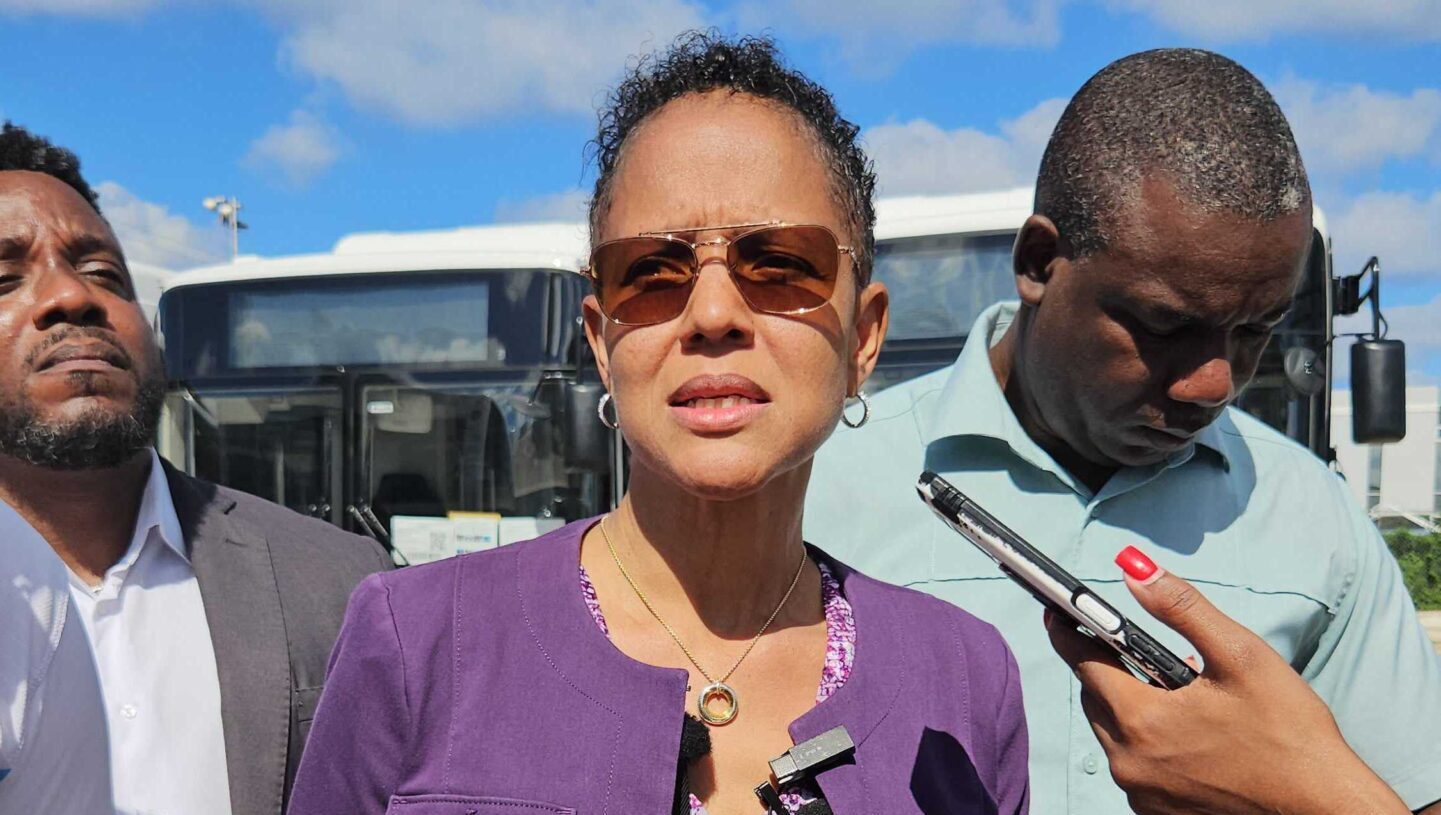
The Barbados government is proceeding with its controversial plan to divest the state-owned Transport Board while simultaneously developing a new mass transit framework, Deputy Prime Minister Santia Bradshaw confirmed Wednesday. The announcement comes despite mounting opposition from various sectors, including the influential Congress of Trade Unions and Staff Associations (CTUSAB).
Speaking during the arrival of 35 new electric buses at Bridgetown Port, Bradshaw emphasized that the process remains in its consultative phase, with workers’ interests positioned as the central consideration. The government intends to conduct comprehensive dialogues with employees and stakeholders before finalizing any decisions regarding the public transportation overhaul.
“Multiple meetings are often necessary when engaging stakeholders on major reforms,” Bradshaw stated, adding that she would not prejudice ongoing discussions. The government recognizes the need for thorough, transparent conversations that allow for potential adjustments to initial proposals.
The Transport Minister underscored the administration’s particular obligation to long-serving employees, many of whom have dedicated decades to the institution. “I feel that we owe it to them first and foremost, along with their representatives, to have conversations without prejudice from opinions in the public domain,” Bradshaw explained, referencing her recent attendance at a ceremony honoring employees’ years of service.
While Cabinet has already approved preliminary proposals for stakeholder discussion, Bradshaw revealed that the government remains open to modifications based on consultation feedback. The administration has simultaneously committed to protecting vulnerable groups throughout the transition process, assuring continued transportation access for pensioners, school children, and essential service personnel.
Bradshaw framed the divestment initiative as part of a broader worker empowerment strategy, stating: “While we divest on one hand, our intention is to enfranchise the Transport Board workers who have given committed service for decades.” The government views the divestment process and worker enfranchisement as intrinsically linked components of their transportation reform agenda.