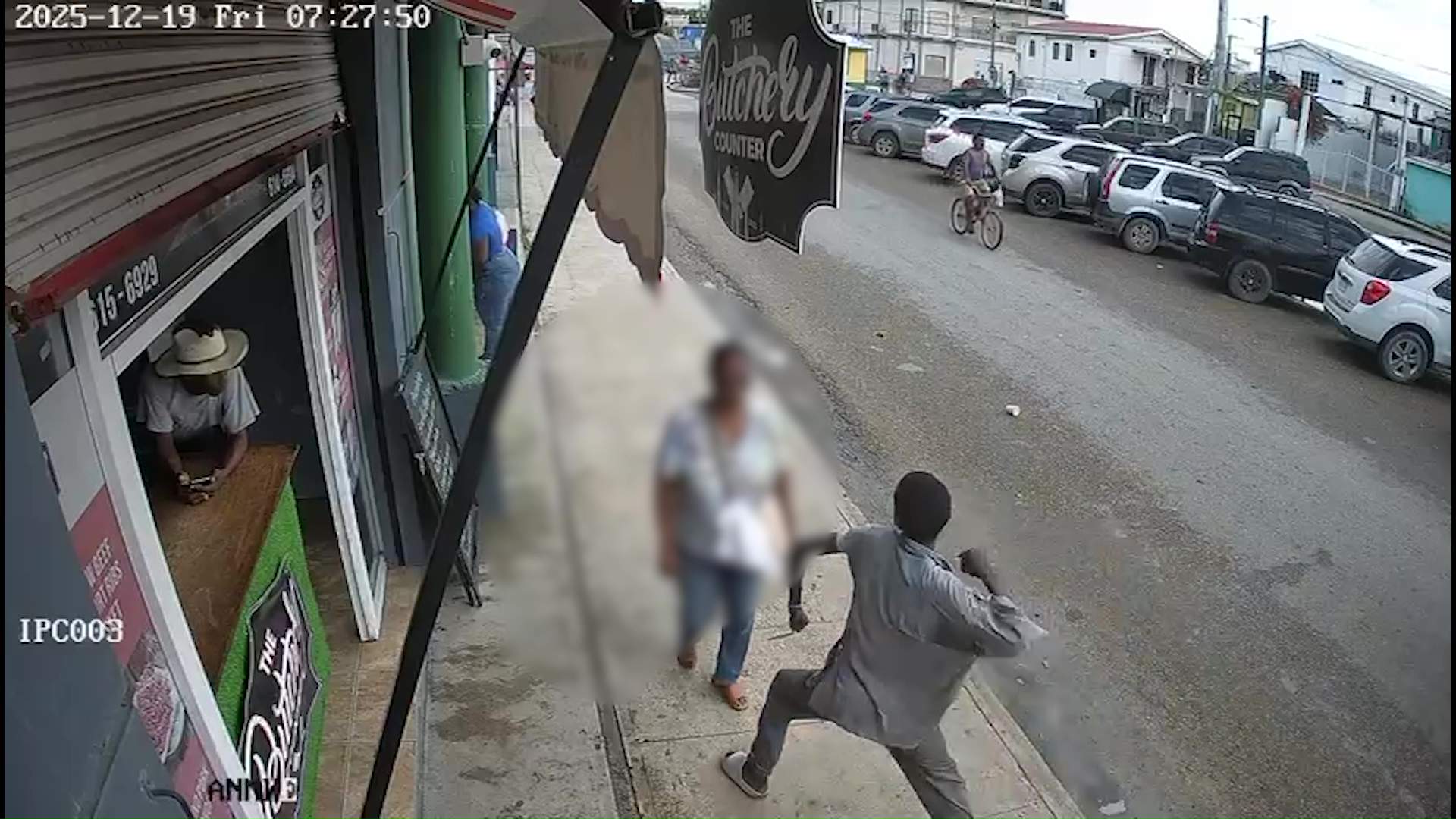
A series of unprovoked assaults against women in Belize City has ignited a fierce national debate surrounding mental healthcare infrastructure and public safety protocols. The incidents, which occurred just before Christmas, involved 27-year-old Kareem Anderson violently attacking two separate female victims on public streets, with one assault captured on viral video footage showing a woman being rendered unconscious near the Michael Finnegan Market.
Court proceedings revealed Anderson’s profound mental health challenges when he appeared disoriented about basic personal details, including his own age. Chief Magistrate Sharon Fraser consequently suspended his arraignment on two counts of harm, mandating instead a comprehensive psychiatric evaluation at Belize Central Prison pending further assessment.
Anderson’s family members provided crucial context, explaining his mental health deterioration began following his father’s death eight years ago. His stepfather, Sheldon Dennison, characterized the attacks as fundamentally abnormal behavior stemming from psychological distress rather than criminal intent. “The government shouldn’t have these type of individuals on the street,” Dennison asserted, emphasizing the need for specialized secure facilities rather than punitive incarceration.
Further family testimony revealed concerning previous treatment attempts. Anderson’s sister, Monique Dennison, recounted how a clinic visit resulted in an injection that allegedly exacerbated his condition without proper diagnostic assessment, leading to exacerbated symptoms including compulsive physical behaviors.
The case has highlighted systemic deficiencies in Belize’s mental healthcare framework. Kathy Esquivel, founder of the Mental Health Association of Belize, identified the critical need for forensic units capable of temporarily detaining individuals experiencing acute psychotic episodes for stabilization. Current psychiatric facilities lack legal authority to intervene proactively with individuals in crisis who haven’t committed crimes.
While resources like the Welcome Resource Center provide essential services including medication, food, and hygiene facilities for homeless mentally ill individuals, they operate with constrained funding and can only assist those who voluntarily seek help.
Eyewitness Joseph Castillo, who assisted one victim, expressed broader community concerns about safety: “The government really need fi do something bout this. Get ney people off the street because ney could hurt innocent people.” His sentiment reflects growing public demand for governmental intervention despite statistics showing most mentally ill street residents are more frequently victims than perpetrators of violence.
The incidents have catalyzed calls for comprehensive mental health reform, balancing public protection with compassionate care for vulnerable populations experiencing psychological crises.