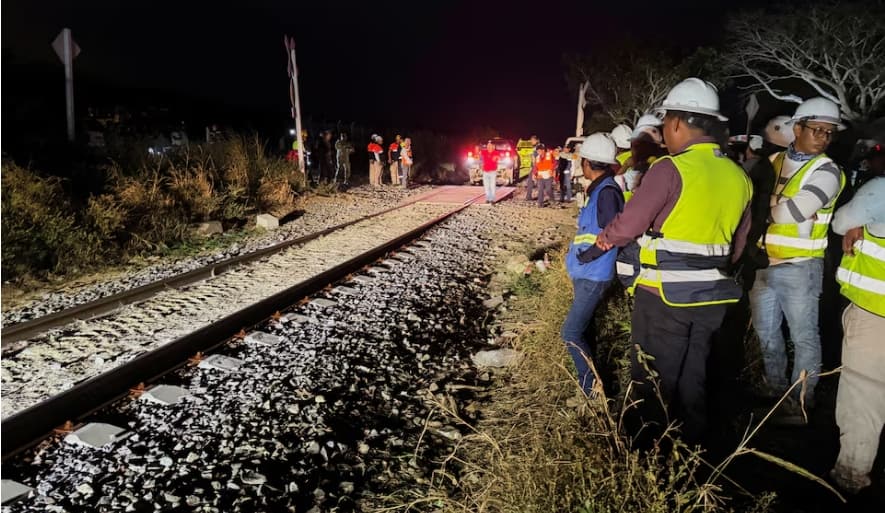
A major passenger train derailment in southern Mexico has resulted in significant casualties, with authorities confirming at least 13 fatalities and numerous injuries. The incident occurred on Sunday when an Interoceanic Train carrying 250 people derailed near the town of Nizanda in Oaxaca state.
According to the Mexican Navy, the train was transporting 241 passengers and 9 crew members at the time of the accident. Emergency response teams were immediately dispatched to the scene to conduct rescue operations and provide medical assistance to survivors.
Medical authorities reported that 139 passengers escaped without serious injury, while 98 individuals sustained various degrees of harm. Among the injured, 36 required hospitalization for treatment, with President Claudia Sheinbaum confirming via social media that five victims remained in critical condition following the derailment.
The Mexican government has mobilized comprehensive support measures for affected families. Senior administration officials have been deployed to the accident site to coordinate relief efforts and provide assistance to victims’ relatives.
Oaxaca Governor Salomon Jara Cruz expressed profound condolences to the families of those killed in the tragedy and emphasized that state authorities were working in close coordination with federal agencies to address the aftermath.
The derailed train service represents a key component of Mexico’s ambitious Interoceanic Corridor project, inaugurated in 2023 under former President Andres Manuel Lopez Obrador. This infrastructure initiative was designed to modernize rail transportation across the Isthmus of Tehuantepec, creating a vital link between Mexico’s Pacific port of Salina Cruz and the Gulf Coast port of Coatzacoalcos.
The broader strategic project aims to transform the isthmus into a competitive trade corridor through substantial investments in port facilities, railway networks, and industrial infrastructure. The development seeks to establish an alternative shipping route that could potentially rival the Panama Canal while stimulating economic growth in southern Mexico through expanded passenger and freight rail capabilities.