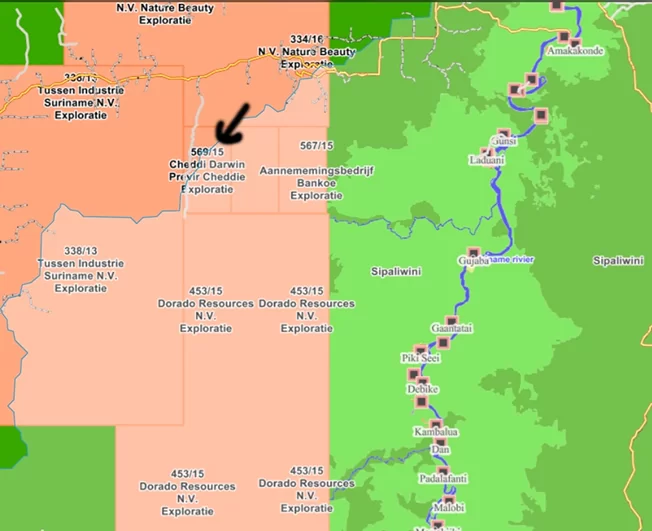
The Saramaccan community in Suriname’s Upper Suriname River region has formally demanded government clarification regarding the controversial extension of a gold mining concession within their ancestral territory. This development has sparked significant concern among indigenous residents who fear environmental and cultural degradation.
Of thirteen gold concessions originally issued between 2015-2020, twelve have naturally expired without renewal. However, Natural Resources Minister David Abiamofo authorized the exceptional extension of one particular concession last year, creating immediate tension within the Saramaccan community. The situation escalated when concession holders attempted to initiate discussions with village leadership in Guyaba, prompting organized resistance.
Assembly Member Edgar Sampie (ABOP) confirmed to media sources that while most concessions from that period have lapsed, this single extension has generated substantial alarm. “Twelve concessions weren’t renewed, effectively halting mining operations in those areas,” Sampie stated. “But this one concession was extended, and precisely this decision has disturbed the community.”
The Saramaccan people have demonstrated unanimous willingness to resist the mining operations. Last week, they submitted an official petition to the National Assembly expressing profound concerns about gold mining activities in their traditional territories south of the Small Saramacca River, between Paaba Creek and Muyangwojo Creek.
According to the petition, mining operations violate international treaties, the landmark Saamaka ruling, and Surinamese law by proceeding without Free, Prior and Informed Consent (FPIC). The community asserts these activities threaten their water sources, public health, cultural practices, spiritual values, and collective land rights.
Their demands include: immediate cessation of all mining operations, complete transparency regarding concession grants, and formal consultation between government officials and traditional Saamaka authorities.
Minister Abiamofo has reportedly suggested the concession falls within Matuariër territory where mining already occurs, rather than Saramaccan lands. Sampie indicates he is investigating this geographical claim while emphasizing that Saramaccan leaders have unanimously resolved to prohibit gold mining throughout their territory.
The community continues to demand transparency regarding the extension decision-making process, current concession status, and potential impacts on their homeland. They expect the minister to participate in a gran krutu (traditional meeting) to provide comprehensive explanations. Minister Abiamofo has not yet publicly addressed these concerns.