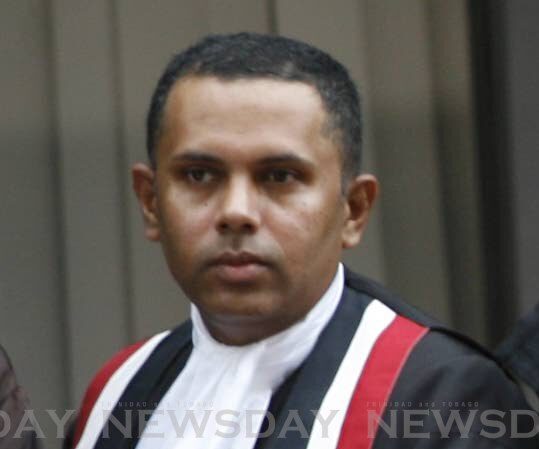
In a stunning judicial rebuke, the Court of Appeal of Trinidad and Tobago has delivered a damning verdict against the Law Association’s disciplinary committee, exposing profound procedural failures within the legal profession’s self-regulatory system. The December 17 ruling, issued during the holiday season, represents one of the most significant embarrassments in the association’s history.
The case emerged from a 2020 complaint filed by a citizen regarding legal representation in a land dispute. Rather than upholding professional standards, the disciplinary committee itself violated fundamental principles of due process and procedural fairness. According to Chief Justice Ronnie Boodoosingh’s detailed assessment, the proceedings lacked any structured approach to disciplinary hearings that both complainants and attorneys rightfully expect.
The judgment revealed that the committee bypassed essential procedural stages, including the preliminary evaluation to determine whether a prima facie case existed. Instead of conducting proper hearings, the panel engaged in informal discussions allowing accused attorneys to comment directly on complaints without formal evidentiary procedures. The process then abruptly transformed into guilt determinations and penalty discussions, completely omitting standard protocols for complaint particularization, evidence presentation, and cross-examination.
Justice of Appeal Nolan Bereaux, in a concurring opinion, characterized the committee’s approach as ‘plainly wrong’ and described the chairman’s conduct as ‘almost cavalier’ in its disregard for proper procedure. The severity of these findings is magnified by the committee’s composition, which included senior counsel (a ‘silk’), a former independent senator, and multiple experienced attorneys.
This ruling highlights a critical failure within the legal profession’s self-governance mechanisms at a time when public scrutiny of judicial and law enforcement institutions remains intense. The case potentially heads toward further appeal, but currently stands as a remarkable instance where the body responsible for legal misconduct has itself been found guilty of violating legal standards.