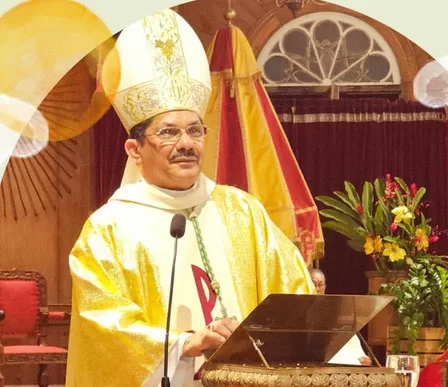
In a profound Christmas sermon that transcended traditional holiday messaging, Bishop Karel Choennie of Paramaribo has issued a compelling call for national reflection and renewal in Suriname. The religious leader reframed Christmas as more than mere festive tradition, presenting it instead as a vital moment for healing, introspection, and collective responsibility toward the nation’s future.
Addressing a congregation grappling with historical legacy and contemporary challenges, Bishop Choennie drew parallel between the biblical narrative of Bethlehem and Suriname’s current reality. He emphasized that the birth of Jesus represents an enduring invitation to maintain hope despite uncertainty and change—a message particularly resonant amid the country’s ongoing struggles with its complex past.
The bishop confronted Suriname’s painful history with unflinching honesty, acknowledging slavery and contract labor as deep wounds within the national consciousness. While stressing the importance of recognizing historical suffering and ancestral resilience, he cautioned against allowing bitterness to paralyze progress. Christmas, he argued, invites genuine reconciliation—acknowledging past trauma without becoming trapped by it.
Bishop Choennie referenced the colonial period as both suppressing Surinamese identity and fostering growing aspirations for justice and self-determination. He pointed to the December 8th trial proceedings as a painful but necessary reminder that truth must precede healing, suggesting that with grace, historical scars can transform into sources of strength rather than division.
The sermon highlighted significant national milestones, including Suriname’s 1975 independence as a historical turning point that initiated domestic responsibility. The bishop openly addressed subsequent periods of moral and financial decline, democratic challenges, and instances when the nation had to rebuild from ‘ground zero’—yet emphasized the people’s persistent hope throughout these trials.
Notable signs of progress included the election of Suriname’s first female president, which Bishop Choennie characterized as a historic development opening new perspectives and encouraging young women nationwide. He also interpreted the recent visit of the Dutch royal couple as meaningful beyond ceremonial protocol—seeing it as an opportunity for acknowledgment, dialogue, and confronting shared history while strengthening national unity through diversity.
Looking forward, the bishop addressed Suriname’s anticipated oil and gas revenues expected around 2028. While acknowledging their potential to improve infrastructure, education, and healthcare, he warned that economic wealth without moral compass risks creating new divisions. He called for choices centered on justice, integrity, and care for the vulnerable—encouraging Surinamers to share their talents and resources not for personal enrichment but to build an inclusive society.
At its core, Bishop Choennie’s Christmas message emphasized proximity and responsibility. God becoming human in simplicity and vulnerability rather than power and splendor challenges every individual to choose connection over polarization, forgiveness over resentment, and collective responsibility over self-interest. He concluded with a prayer for the coming year—that it may be marked by wisdom, courage, and solidarity, with all Surinamers regardless of origin, color, or faith feeling at home. “May the light of Christmas continue to guide us,” he urged, “today and into the future.”