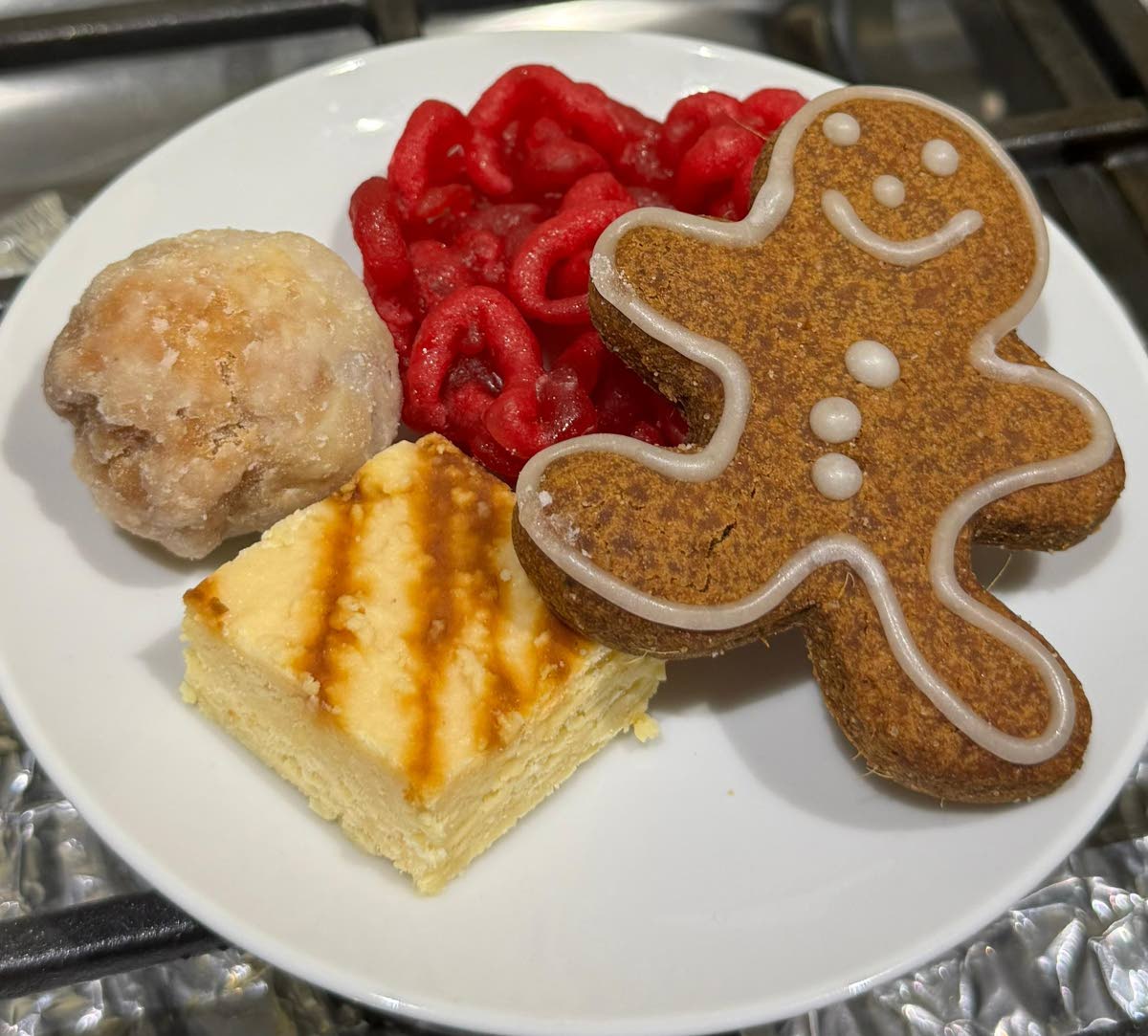
A family-owned Trinidadian enterprise has masterfully bridged cultural divides through an innovative culinary initiative. The Little Store in Curepe, maintaining its six-decade legacy, has reimagined traditional Hindu sweets (methai) by infusing them with beloved Christmas flavors, creating a unique gastronomic fusion that honors both traditions.
The concept emerged during the pandemic’s challenging times when General Manager Vinayak Sankar and his team began experimental kitchen sessions. As an essential business providing groceries and funeral supplies, they sought creative avenues to sustain operations. These experiments evolved into a limited Christmas collection that creatively merges Hindu confectionery traditions with festive seasonal elements.
Their innovative lineup features butterscotch barfi, spiced gulab jamun balls, sorrel jalebi, and gingerbread-shaped roat—each maintaining traditional preparation methods while incorporating festive flavors. The gingerbread roat has gained particular popularity for its customizable Christmas shapes, becoming a novel addition to Trinidadian holiday dessert selections.
Sankar emphasizes that the integrity of traditional methai remains uncompromised: all products remain eggless, salt-free, and additive-free, preserving their religious suitability for offerings. The sweets are prepared fresh daily, maintaining quality and authenticity.
Customer response proved overwhelmingly positive, with immediate interest upon the products’ shelf placement. The innovation has attracted younger demographics and non-Hindu customers, reflecting growing cultural openness. Despite initial skepticism from some traditionalists, the initiative has fostered cross-cultural appreciation and dialogue.
Now in its third seasonal iteration, the Christmas methai collection has demonstrated commercial success beyond expectations, prompting development of additional fusion concepts. The store’s sister company, Chatak Food Products, has introduced Jazz Mix—a festive variation on traditional chiblo snack—further expanding this cultural culinary exchange.
Sankar reflects that this initiative represents more than commercial innovation—it embodies Trinidad and Tobago’s multicultural identity, promoting unity and mutual respect across diverse communities during the holiday season.