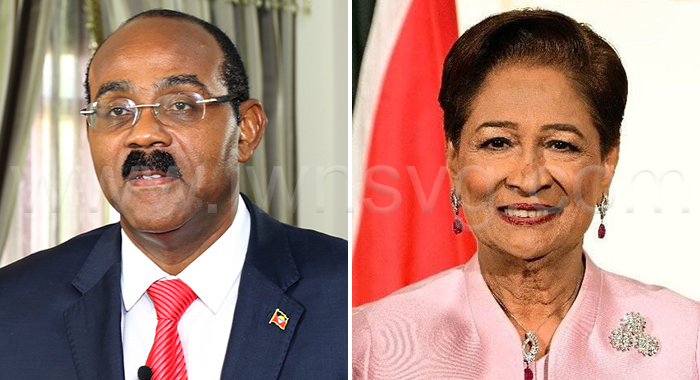
A significant diplomatic dispute has emerged within the Caribbean Community (CARICOM) as Antigua and Barbuda’s government has issued a formal rebuttal to Trinidad and Tobago Prime Minister Kamla Persad-Bissessar’s characterization of the regional bloc as “unreliable” and “dysfunctional.”
Prime Minister Gaston Browne delivered a comprehensive response challenging Persad-Bissessar’s assertions, emphasizing that her comments warranted “a measured response grounded in facts, respect, and the long history of Caribbean cooperation.” The exchange represents one of the most public disagreements among CARICOM leadership in recent years.
The core of the disagreement stems from Persad-Bissessar’s statement that CARICOM had “lost its way” by criticizing United States visa policies while maintaining relations with Venezuela’s government under Nicolás Maduro. She specifically distanced Trinidad and Tobago from CARICOM’s position regarding U.S. travel restrictions imposed on nationals from Dominica and Antigua and Barbuda.
Prime Minister Browne presented substantial economic data to counter the reliability claims, revealing that Trinidad and Tobago had generated over US$1.1 billion in foreign exchange from CARICOM trade in 2024 alone. He highlighted that Trinidad maintains CARICOM’s only consistently positive trade balance since the organization’s founding in 1973, with the bloc serving as its second-largest export market after the United States.
The Antiguan leader detailed how CARICOM members had collectively forgone approximately US$142.7 million in customs revenue through the Common External Tariff system, specifically to protect Trinidad and Tobago’s manufacturing sector. “This economic sacrifice,” Browne noted, “has been borne by Caribbean consumers in the spirit of regional solidarity.”
Beyond economic cooperation, Browne emphasized CARICOM’s role in addressing regional security challenges, noting that the organization’s security mechanisms and intelligence sharing have been “an essential pillar” in combating Trinidad’s significant organized crime problems.
The diplomatic tension emerged after the U.S. temporarily restricted visas for nationals from Antigua and Barbuda and Dominica—a decision later suspended following diplomatic representations. Persad-Bissessar had warned Caribbean nations about “bad-mouthing” the U.S., suggesting Antigua and Dominica faced consequences for their foreign policy positions.
Browne categorically rejected claims that Antigua had disparaged the United States, stating “no evidence has been offered because none exists.” He emphasized his country’s “close collaboration with the United States, including constructive engagement on security matters, immigration, and consistent cooperation in multilateral fora.”
The Antiguan leader concluded that CARICOM remains “a partnership rooted in shared history, shared bloodlines, shared struggle for independence, and a shared determination that small states are stronger when they act together,” advocating for continued regional unity despite current disagreements.