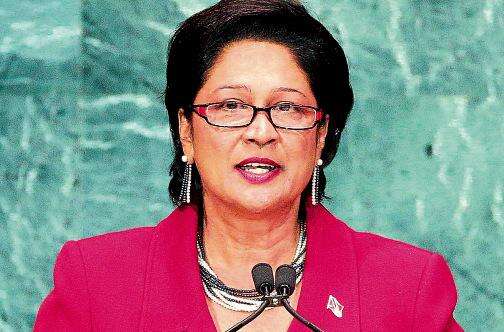
PORT OF SPAIN, Trinidad – In a striking diplomatic rupture, Trinidad and Tobago’s Prime Minister Kamla Persad-Bissessar has publicly denounced the Caribbean Community (CARICOM) as an unreliable partner, signaling a profound fracture within the regional bloc. The condemnation emerged amidst a contentious dispute regarding U.S. visa restrictions and the organization’s perceived alignment with Venezuela’s government.
Prime Minister Persad-Bissessar issued a formal statement distancing her nation from CARICOM’s collective position on recent U.S. immigration measures. She asserted that the 15-member integration grouping ‘will not determine the future’ of Trinidad and Tobago, characterizing the organization as having ‘lost its way’ in its foreign policy orientations.
The diplomatic schism centers on contrasting responses to the United States government’s December 2025 announcement of enhanced entry restrictions for certain foreign nationals. While the CARICOM Bureau – comprising the prime ministers of Jamaica, Barbados, and Grenada – expressed concern about the visa limitations’ potential adverse effects on regional travel and economic stability, Trinidad’s leadership adopted a distinctly different stance.
Persad-Bissessar emphasized her government’s recognition of Washington’s sovereign right to implement policies advancing its national security interests. ‘Every sovereign state is responsible for its foreign and domestic policy choices and must be prepared to accept the concomitant consequences,’ she stated, framing the U.S. decision as a ‘measured response’ to international circumstances.
The Trinidadian leader delivered particularly sharp criticism regarding CARICOM’s approach to Venezuela, accusing the organization of ‘lending support to the Maduro narco-government’ while ‘disparaging our greatest ally the United States.’ She referenced the Venezuelan government’s human rights record and its threats against two CARICOM member states as evidence of the regional body’s misguided trajectory.
Further exposing internal divisions, Antigua and Barbuda Prime Minister Gaston Browne separately criticized CARICOM’s handling of the situation, referencing ‘inertia and insularity’ within the organization. Browne revealed that despite his advice that the visa matter was resolved, CARICOM proceeded with issuing its critical statement, highlighting coordination failures within the bloc.
Persad-Bissessar concluded with a stark warning about CARICOM’s institutional viability, citing ‘widening fissures’ beneath ‘the thin mask of unity’ that threaten to cause its ‘implosion.’ She identified poor management, factional divisions, and inappropriate meddling in member states’ domestic politics as existential challenges requiring transparent acknowledgment and reform.