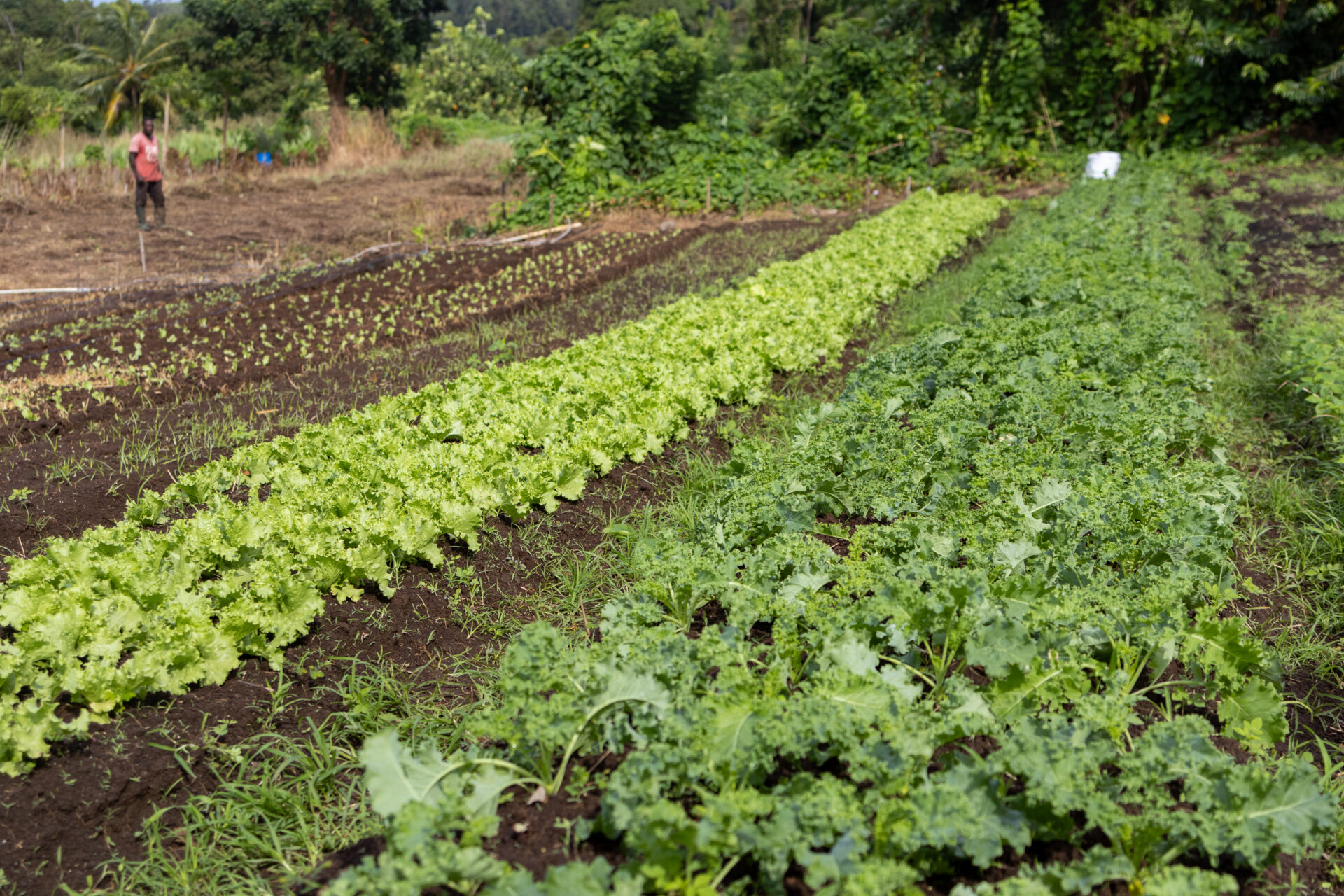
In the pre-dawn tranquility of Grange, Portsmouth, Yves Joseph tends to the fertile volcanic soil that has become his adopted home. His journey from Haiti to Dominica began not as a migration plan but as a 2006 visit to follow his Dominican wife, whom he met while studying agriculture in Cuba. What began as a personal pilgrimage evolved into a nearly two-decade contribution to Dominica’s agricultural sector, embodying the transformative potential of migrant integration.
Yves’ farm, Joseph’s Best Eco Produce, stands as a testament to disciplined land stewardship and agricultural expertise. Operating one of the island’s most productive vegetable farms, he supplies supermarkets, restaurants, and direct consumers across Portsmouth and Roseau with diverse crops including lettuce, kale, carrots, cucumbers, cabbage, peppers, and herbs. Despite consistent market demand for fresh local produce, Yves faces Dominica’s critical agricultural labor shortage that threatens national food production.
“I have land. I have water. I have fertile soil. I have the knowledge and willingness to produce,” Yves states. “But I need labourers.” This shortage forces continued reliance on imported vegetables despite Dominica’s rich agricultural potential.
Migrant workers, particularly from Haitian communities, have provided foundational support to Dominica’s food systems for decades. Beyond filling labor gaps, they introduce innovation, enhance quality standards, and create new markets. Yves exemplifies this contribution through his technical expertise gained in Cuba, implementing advanced water supply systems, soil health management, crop rotation techniques, and sustainable apiculture.
His beekeeping operation represents more than secondary income—it’s a vital ecological component. “Bees are life,” Yves emphasizes. “If we do not have bees, we will die.” His bees enhance farm productivity through pollination while producing world-class honey recognized for its purity, medicinal properties, and unique flavors derived from Dominica’s biodiversity. This apiculture work opens doors to agro-tourism, high-value exports, natural product development, and rural employment opportunities.
The human narrative behind this agricultural contribution reveals deeper dimensions. Yves found acceptance in Dominica that many migrants worldwide still seek. “Dominica accepted me,” he recalls. “I embraced her as my second home.” In return, he has contributed nearly twenty years as a farmer, worker, taxpayer, community member, and now Dominican citizen.
His story reflects broader Caribbean experiences where migration drives development rather than threatening it. As Dominica advances its Blue and Green Economy vision, labor migration must transition from peripheral concern to strategic priority. The proposed creation of an agricultural labor migration hub would connect farmers with skilled workers, increase public understanding of migrant contributions, inspire youth agricultural careers, foster local-migrant collaboration, support agro-processing innovation, and strengthen national food security.
On International Migrants Day 2025, Yves Joseph’s journey demonstrates what becomes possible when migrants are welcomed, included, and empowered: strengthened agricultural sectors, enhanced food security, sustainable production methods, and new entrepreneurial pathways. His farm represents not just land cultivation but a hub of hope, proving migration represents not burden but bloom—the very growth Dominica needs to thrive.
Yves seeks not charity but opportunity—to feed Dominica with what Dominica can grow. His story reframes labor migration from crisis to opportunity, reminding us that migrants don’t just arrive in countries; they help nurture them. The future of healthier food, thriving farms, and progress in sustainable economies depends on embracing those ready to build it.