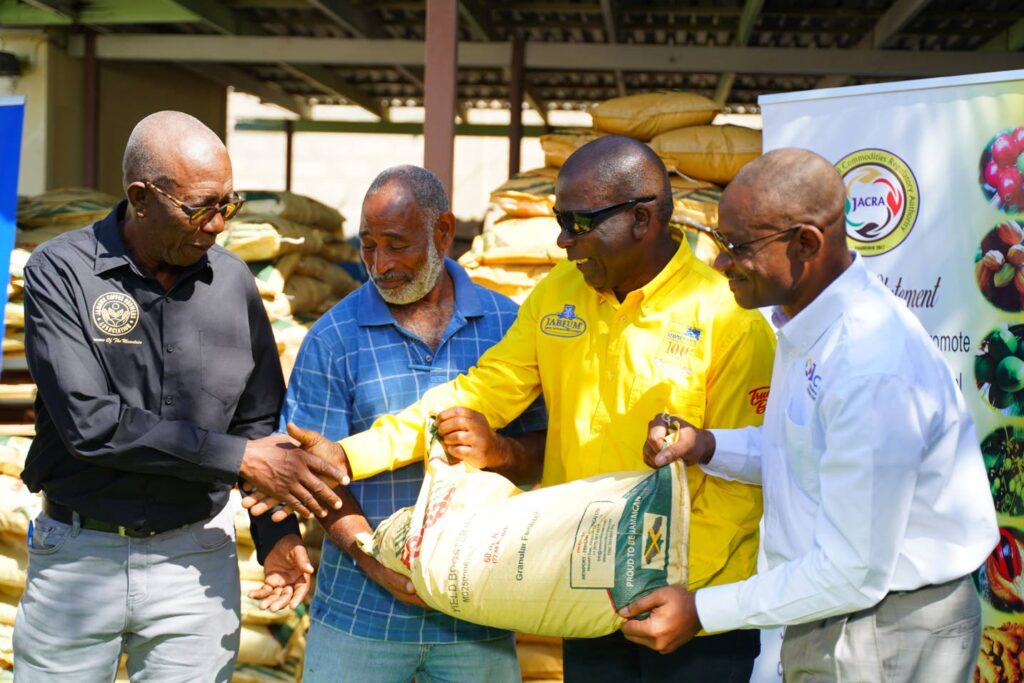
Jamaica’s prestigious coffee sector is navigating a complex recovery path as government initiatives face scrutiny from growers who argue that current support levels remain insufficient. The Jamaica Agricultural Commodities Regulatory Authority (JACRA) recently distributed 5,000 bags of fertilizer valued at $35 million to coffee farmers, representing part of a broader $120 million intervention package jointly funded by the agency and the national government.
This assistance falls under the Coffee Crop Resuscitation and Establishment Programme (CREP), a five-year strategy designed to establish nurseries and facilitate widespread replanting across both Blue Mountain and High Mountain coffee regions. JACRA’s acting director general Wayne Hunter confirmed the readiness of 10,000 seedlings for High Mountain varieties and an additional 15,000 planting materials for Blue Mountain cultivation, scheduled for distribution during the April planting season.
Despite these measures, Jamaica Coffee Growers Association President Donald Salmon expressed concerns about the pace and scale of support. “While we appreciate what we get from the Government… I don’t want to sound greedy, but we need much more. It is significant assistance, but the farmers are really hurting,” Salmon stated during the handover ceremony.
The industry has endured consecutive challenges from extreme weather events, including a devastating blow from Category 5 Hurricane Melissa on October 28. Preliminary estimates from Jamaica Coffee Exporters Association Chairman Norman Grant indicate losses reaching $1 billion, with accumulated deficits totaling $2.5 billion.
Agriculture Minister Floyd Green acknowledged the need for urgent CREP reforms, noting that the program required enhancement even before the hurricane’s impact. The government has allocated approximately $100 million specifically for coffee sector recovery, with focused attention on providing farming materials identified as critical needs by growers.
Minister Green revealed innovative approaches to addressing infrastructure challenges, stating: “The coffee roads require, in my view, a separate program.” The ministry is collaborating with the National Works Agency to develop cost estimates for specialized road rehabilitation in coffee-growing regions, recognizing the unique engineering demands of the mountainous terrain.
Salmon advocated for additional measures including revived insurance schemes for climate-vulnerable farmers and technological modernization of farming practices. He emphasized the global reputation of Jamaican coffee while highlighting structural challenges: “The farmers who produce 80% are either squatters, have no land title, are very small and capital starved.”
The association president concluded with a stark reminder of the industry’s foundation: “Without the coffee growers and the farmers there’s no JACRA for coffee. No exporter. So support us.”