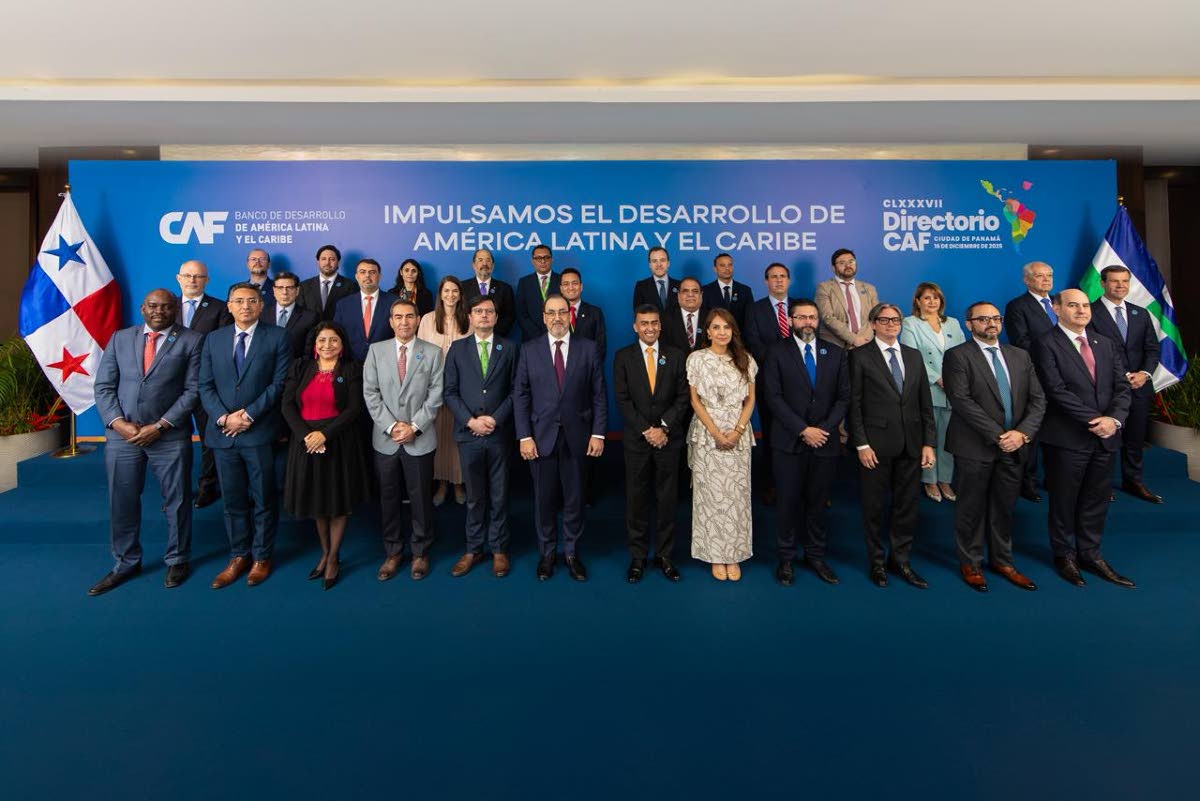
In a landmark decision signaling expanded regional integration, the Development Bank of Latin America and the Caribbean (CAF) has formally approved St Kitts and Nevis and Haiti as new shareholder countries. The historic move was ratified during the institution’s board of directors meeting convened in Panama City on December 16 under the leadership of Chairman Davendranath Tancoo, who serves as Trinidad and Tobago’s Finance Minister.
This strategic incorporation will enable both Caribbean nations to access tailored development financing mechanisms, specialized technical assistance programs, and knowledge-sharing initiatives specifically designed for small island developing states facing climate vulnerability challenges. The expansion effectively triples CAF’s Caribbean shareholder base compared to 2023 levels, representing the most significant regional enlargement in the institution’s history.
Concurrently, CAF’s board authorized substantial financial commitments totaling $3.175 billion for pan-regional operations. These funds will catalyze critical infrastructure projects spanning electricity generation, water security systems, sustainable transportation networks, and support mechanisms for vulnerable communities. Additional financing will target small and medium-sized enterprises alongside productive economic sectors requiring development capital.
The institution has demonstrated accelerated Caribbean engagement throughout 2025, having incorporated Saint Lucia in June during its Seville board meeting. This follows earlier expansions that welcomed The Bahamas, Antigua and Barbuda, and Grenada into the shareholder framework over preceding twelve months. Currently, six Caribbean nations maintain shareholder status with several others advancing through various incorporation stages.
CAF Executive President Sergio Diaz-Granados emphasized the institution’s regional philosophy, stating: ‘St Kitts and Nevis and Haiti are joining a home-grown development bank that was established by the region specifically for regional advancement.’ He characterized CAF as ‘more than a financial institution—it constitutes a strategic bridge unifying Latin American and Caribbean development objectives through contextually appropriate solutions.’
In a parallel development, the board confirmed Barbados’ successful compliance with requirements to transition to full membership status. This elevation positions Barbados alongside Trinidad and Tobago as the second CARICOM nation to achieve full membership standing within the development bank.
Since establishing its regional headquarters in Trinidad and Tobago in 2022, CAF has deployed extensive programming across climate finance, resilient infrastructure development, public service modernization, and digital transformation initiatives. The institution continues to expand its portfolio encompassing blue and green economy investments, cultural heritage tourism, and educational development programs throughout the Caribbean basin.