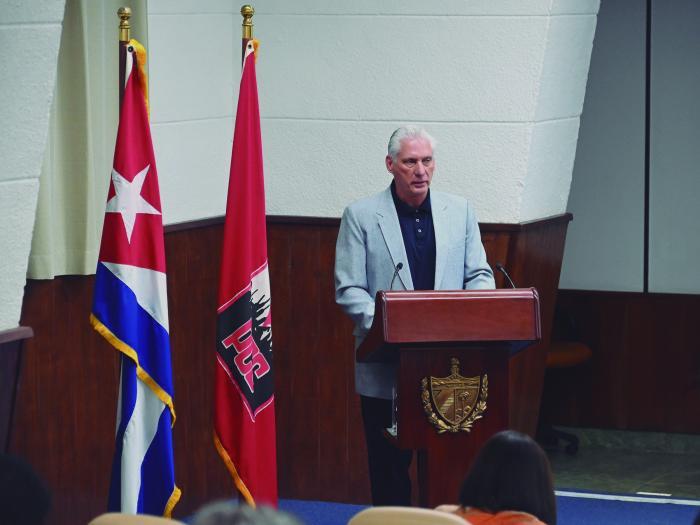
In a pivotal address concluding the 11th Plenary Session of Cuba’s Communist Party Central Committee, President Miguel Díaz-Canel delivered a comprehensive assessment of the nation’s critical challenges while outlining a path forward for the revolutionary government. The December 13, 2025, speech at Havana’s Palace of the Revolution confronted Cuba’s severe economic contraction, with GDP declining over 4% and inflation soaring amid what the president characterized as “brutal persecution” by the United States.
Díaz-Canel acknowledged the devastating impact of Hurricane Melissa alongside structural economic problems, including paralyzed industrial activities, critical power generation shortages, and unmet food distribution needs. He presented these challenges within the context of six decades of US economic embargo, which he described as a “genocidal policy” designed to suffocate the Cuban Revolution.
The president emphasized that revolutionary transformation requires more than economic adjustments, demanding fundamental changes in mentality and party work methods. He stressed that authentic leadership emerges not from reports but through direct engagement with communities, stating: “Our most important tasks are in the field, in the neighborhoods, with our ears to the ground and our feet on the ground.”
Díaz-Canel condemned the new US National Security Strategy as a return to “gunboat diplomacy,” citing the recent seizure of a Venezuelan oil tanker as evidence of escalating aggression in the region. He positioned Cuba within broader Latin American solidarity movements, vowing to strengthen integration with sister nations facing similar pressures.
The address outlined specific economic measures, including prioritizing food production as a national security imperative, reforming state enterprises, responsibly integrating MSMEs and cooperatives, and pursuing monetary reforms while protecting vulnerable populations. The energy transition emerged as a critical focus, with investments in renewable sources and efficiency programs framed as both practical necessities and social justice commitments.
Díaz-Canel called for renewed youth engagement, transparency in governance, and systematic implementation of plenary agreements with clear accountability mechanisms. He concluded with a rallying cry for unity and revolutionary perseverance, invoking Cuba’s historical resilience against external pressure while acknowledging internal shortcomings that require addressing through criticism and self-criticism.